Uncategorized


There are just a few pieces to this week’s move to action: a poem, an outreach template, and Nelson Mandela…

This poem was displayed by a Palestinian street vendor outside Nabiha, the restaurant we enjoyed after our visit to the Museum of the Palestinian People on Aug 23. The poem wasn’t displayed with an author’s name and we didn’t get the name of the vendor, though he did tell Bilal he sends money to a Gaza family…

Dreams

He lost his arms in the first strike,

and in the second, he died dreaming of an embrace.

A child who believes that dreams come true

and that mothers never lie.

Turning to our outreach, we’ve already raised over $23,000 for university scholarships for Palestinians and several runners are still sorting out how to tackle our fundraising responsibility. To help, we’re sharing fundraising templates in some messages; this one is my 2nd fundraising letter this year, which I typically send during the week before my race…

Dear Iqraa friends,

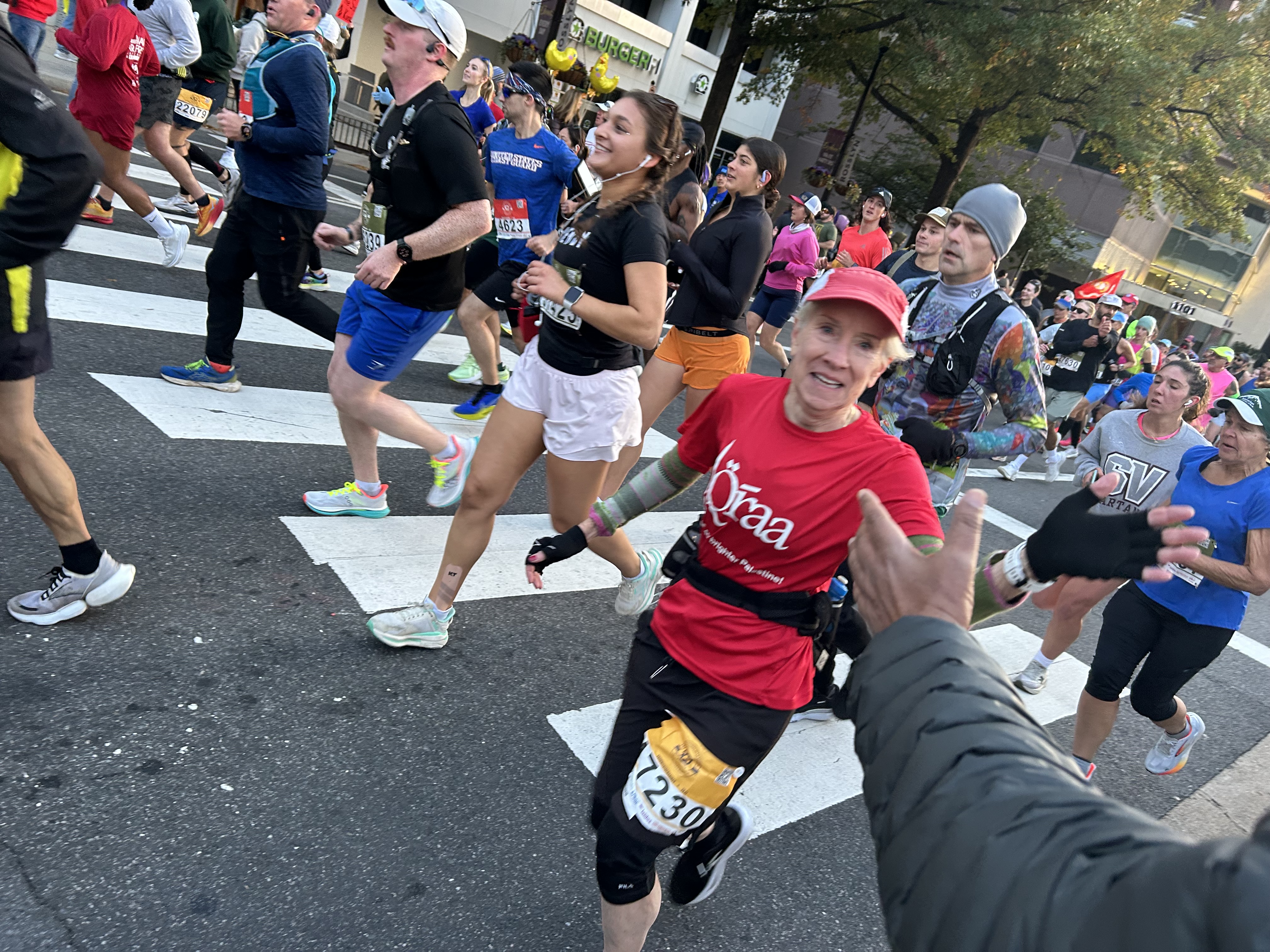
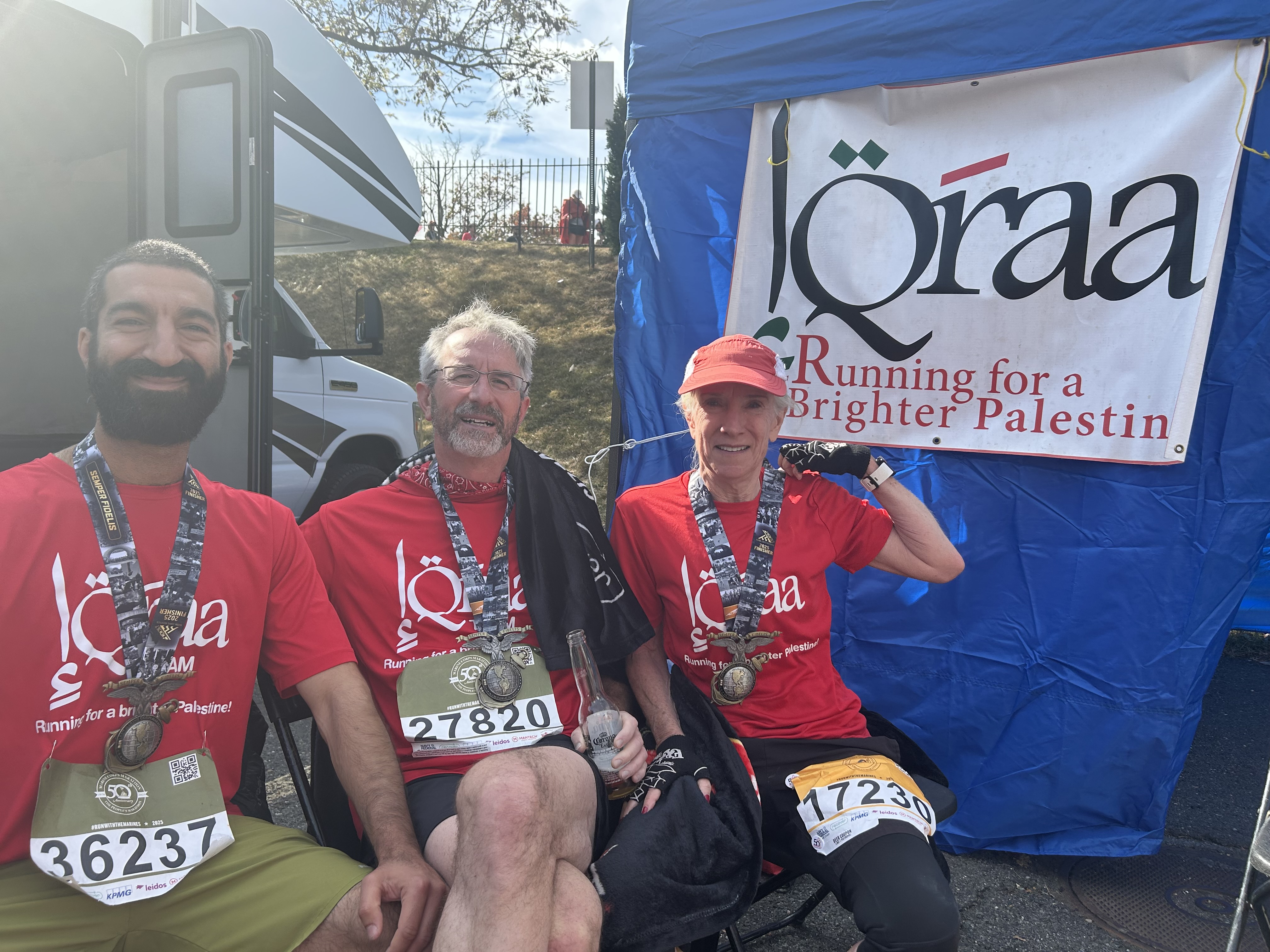
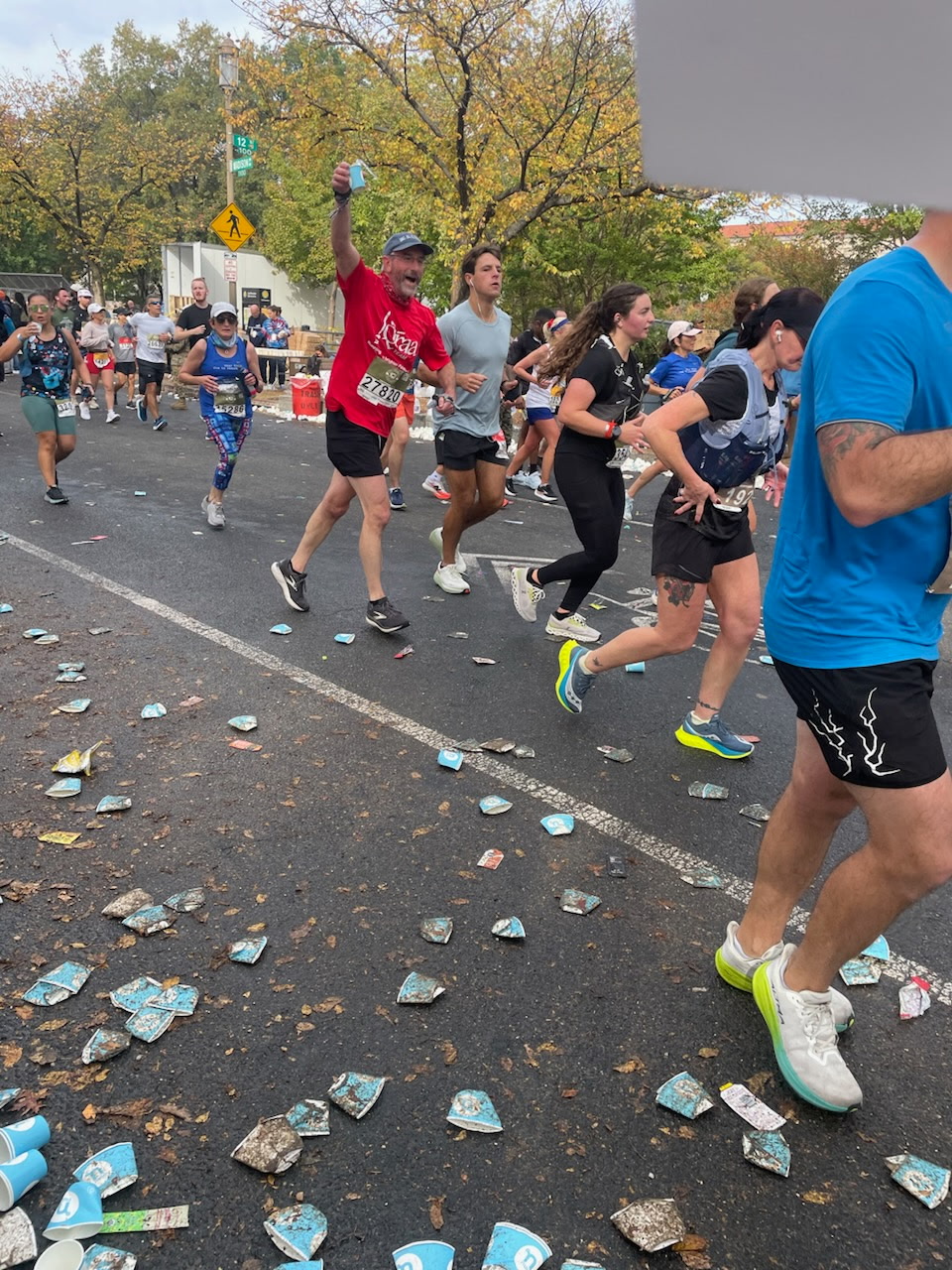
I’m excited—and a little anxious—as I anticipate my return to racing for the first time since Oct 7, 2023 (photo). I‘m participating in the Waterman’s triathlon at Rock Hall MD tomorrow, Sept 28.

  • This’ll be my first race since my hamstring injury was diagnosed in July 2024; my first race at Rock Hall too. The swim leg will be in the Chesapeake, and my primary anxiety is over the water temperature; I hope it’s warm enough that I won’t regret not having a wetsuit.

Mostly, though, I’m happy to be able to participate in a race again. I’m not a big racer, and certainly not fast. But the ability to compete is an important reflection of my commitment to supporting education for Palestinians. Since I founded Iqraa in 2008, the race—and the training that goes into it–is what I highlight to say, “Friends, this cause is serious and close to my heart; I hope you’ll support me.”

  • Last year was the first in which I couldn’t race. You supported me despite that and I know you share my commitment: Palestinians are equally deserving of every human right and liberty that we cherish.
  • Our support for those basic rights is powerful, as by providing university scholarships every year we demonstrate our belief in their rightness and universality.
  • A return to racing has been my goal for more than a year and I’m happy anticipating it: athletes gathering at the start, silence during and cheers following the National Anthem, pulsing music for the send-off, even inshallah the bracing cold of the plunge into the Bay.    

Iqraa’s partner for our fundraising efforts is United Palestinian Appeal, a 501(c)3 charitable organization founded in 1978 that’s earned the maximum 4-star rating from Charity Navigator. To help us provide more educational opportunities in Palestine and Jordan, you can give online at my Iqraa page or write a check payable to United Palestinian Appeal (UPA) with Iqraa/Kirk in the Memo line and send it to me or to UPA at 1330 New Hampshire Ave NW (Suite 104), Washington DC 20036.

Iqraa’s slogan is “Running for a brighter Palestine,” and I thank you for contributing to the brightness. 

And thanks again to all who’ve already contributed!

—-End—

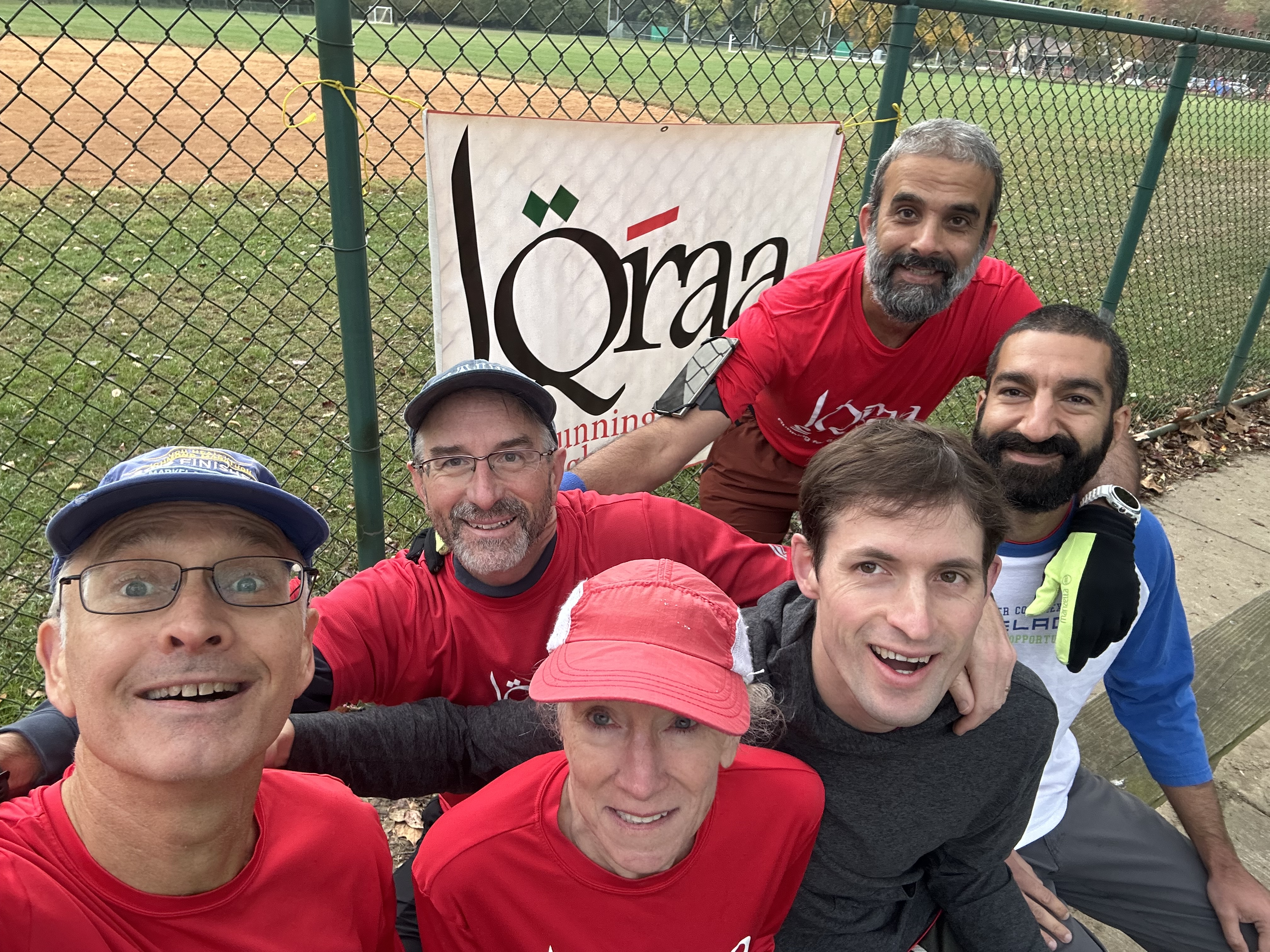
Last week/this week. Last Saturday at Reston, Basma, Basel, Bill, Reza, and me, and (not pictured) Mazen and Peter, ran or walked for a brighter Palestine. This Saturday at Carderock, the marathon trainees will run 20 miles, while half-marathoners will run 4.

Friends, it’s time to move to action so together we can make education more available for Palestinians. There’s no better call to action than this, from a great freedom fighter–Nelson Mandela:

  •     “Education is the most powerful weapon which you can use to change the world.”


First, let’s thank Basel for hosting last Saturday’s run. Nick called it one of the best training-run brunches he’s had. Alf shukr wa shukr! (1001 thanks!)

Appreciation also for those who’ve created your fundraising pages. And I know several of you are drafting your letters too. Here’s the link for those who need to make a page and those who want to contribute:

Listen, I know that fundraising isn’t anyone’s favorite activity, and I understand that some feel there’s an ‘ayb (shame) in asking anyone for anything.

But let’s take a look around… there’s a genocide in Gaza that includes the destruction of virtually all educational infrastructure. Here in America, there’s suppression against those who speak out for Palestinian equality.  

These injustices cannot stand! …But injustice won’t just collapse and go away. Only action will bring change. “If not us, who? If not now, when?” (Rabbi Hillel; born in Babylonia, now Iraq, 1st century BCE)

Remember this, friends: we’re not asking anyone to help US.

We’re asking people to help provide Palestinians with an education because in doing so we’re asserting the equal right of Palestinians to be educated.  And we’re not going to stop. Education toward liberation!

Here’s the potential—and the power when we act—of our outreach:

  • Americans—our potential sponsors—need to know what’s happening in Palestine
  • Americans—our potential helpers—need to know what they can do
  • Palestine is not going to brighten itself: we’re running for a brighter Palestine. That’s an active verb, a transitive action
  • Education isn’t free but we can help provide it to those who might never afford it through our fundraising efforts
  • Palestinians are alone unless we help them. I know you all want to help. Don’t let yourself be restrained by inhibition about asking.

Last week/this week. Last Saturday at Columbia Island, Basel hosted and Cathy, Reza, and Imad (not pictured) ran while I walked. This Saturday, we’re running in Reston; 12 miles for marathoners and 8 miles for half-marathoners.

Running toward a future bright with a liberated Palestine and a truly equal America.


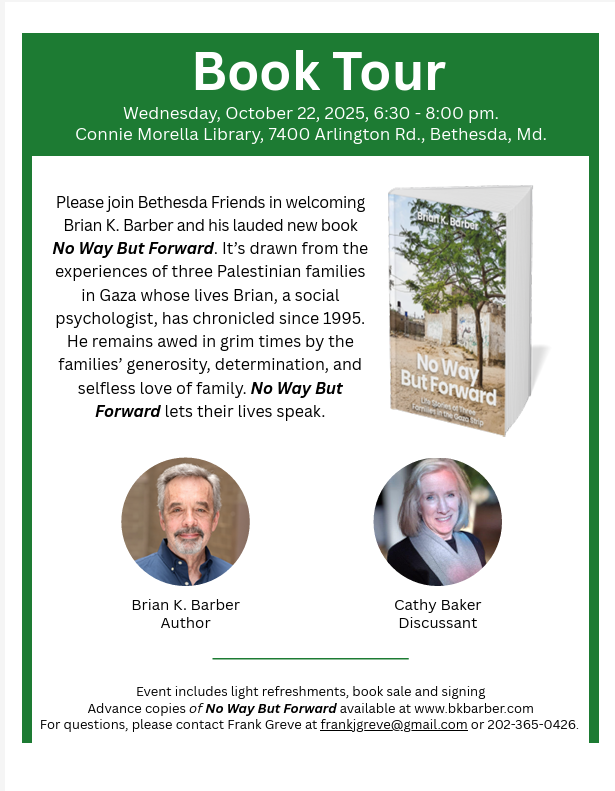
I often look for fresh insights to the importance of education and ways to highlight to fellow Americans the equal humanity of Palestinians. Fortunately, Brian Barber’s book, No Way But Forward: Life Stories of Three Families in the Gaza Strip (2025) provides both.

  • A theme throughout, and reflective of Palestinian culture, is that education is as at least as important in Gaza as any place in the world you might imagine. In comparison to more privileged communities, education is recognized from an early age as a foundation for the future and an opportunity provider.

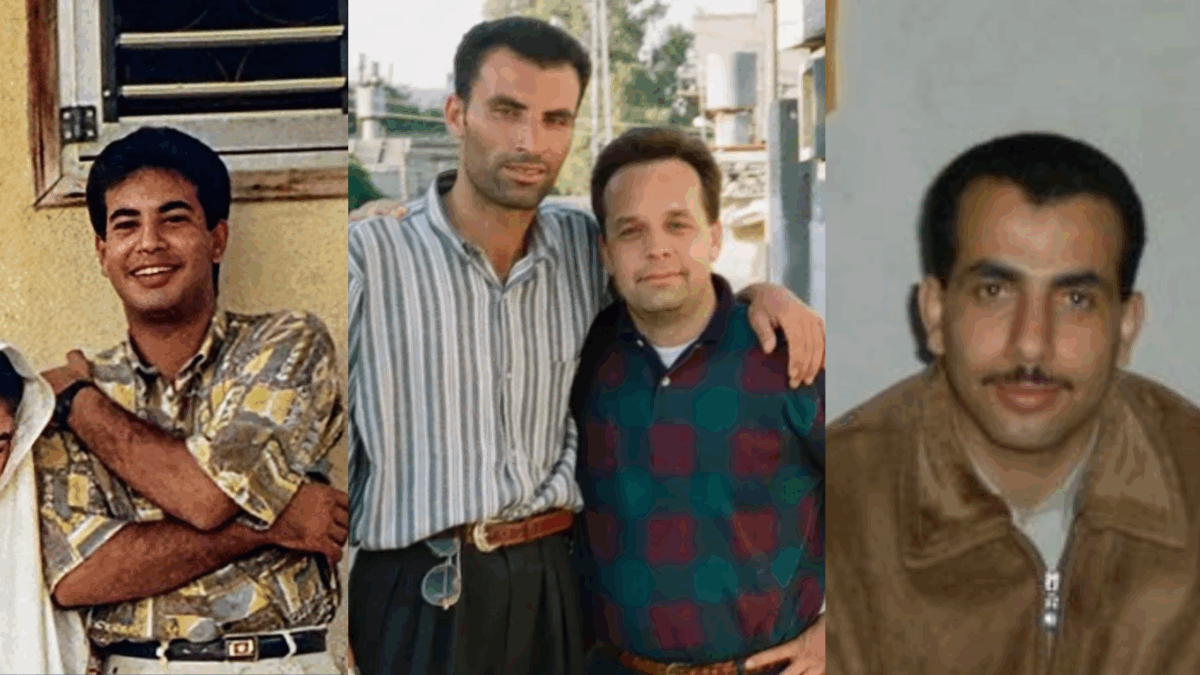
Before we go to the biographical summaries (picture attached), here’s a link for those who want to see the author’s website and/or order No Way But Forwardhttps://bkbarber.com/books/

Hammam Faqawi. We first meet Hammam–who goes on to becomes a teacher like his father, Fuad, and then a headmaster, earning a Master’s degree at Al-Azhar University in Gaza—when he’s 5 years-old (1980). His mom—Fatima—readies him for the first day of kindergarten:

  • a crucial day, as it was for every Palestinian child. In a culture that regards education as vital, it was ‘the first step of the ladder of the life,’ as the saying goes.”

Two weeks after October 7, 2023, Hammam chances upon his student, Mahmoud, displaced from Gaza City and living in a school.

  • The young student says: “You will come to teach us again. There are many students from our school in Gaza [City] but we lost the books. We came from Gaza with only our clothes on…many of the students of our school said their homes were bombed…and some were pulled out in pieces from under the rubble.”
  • Mahmoud’s little brother also recognizes Hammam: “you are the teacher who teaches Mahmoud…Come on, come to the school. We now live there. Come and teach us there.” Hammam cried, understanding that the “child wants to learn even in these very, very difficult circumstances. This child conveyed to me, with the innocence of childhood, that knowledge is a message and there is a future.”
  •  April 2024, Hammam texted Brian: “Now a new suffering has begun…I want to provide an opportunity for education for children…Everything is destroyed…There is no education. No universities, and no future for the children. For the first time in my life, I feel helpless. I want to change my children’s lives. I want them to learn.”
  • July 2024: “My kids are asking me questions I can’t answer. They are asking about their future. They’ve lost one year of learning, and the second will start soon.”  
  • December 2024. Hammam’s brother Hani is severely injured but survives an Israeli missile strike while driving his Save the Children car.   

Khalil Abu Shammala. Khalil and his siblings received an education in morality and community at their mother—a refugee from Barbara in present-day Israel—Tammam’s knee, in addition to their formal schooling. Khalil went on to become the Exec. Dir. of the Gaza-based Al-Dameer human rights organization from 1998 to 2014.

  • The impact of education on Khalil, including “the Academy of the Palestinians” (prison) was lifechanging:
    • “If the naivete Khalil had always felt had been transformed through his intifada [1987-1993] experiences—his initial detention and subsequent imprisonment—his years as a student political leader while earning his bachelor’s degree in English literature catapulted him into a self-assured young man of twenty-six (1996).
  • Post-October 2023, Khalil’s kids, Nour and Mohammed, graduated from Al-Azhar before October 7, but his daughter Nesma’s computer engineering studies at the same university—she was to have been hired by Google as a web developer upon graduation–were interrupted by Israel’s destruction of Gaza.
  • September 2024. Nour is accepted into a master’s program at the University of Jordan, to study remotely. “She is so happy.” She takes the risk of daily travel to find an internet connection.

Hussam Abushawish. Hussam is 13 when we meet him (1986) and grappling with the dissonance between his grandmother’s assertion that his people were the inhabitants of Palestine/Israel–hailing from Barqa, a few dozen kilometers from Nuseirat in Gaza, where they now lived—and his undeniable reality that Israeli soldiers controlled their lives.

  • Hussam resolves this cognitive dissonance with several months of research, after which he creates a poster board describing the history of Palestine that he places in his classroom. The headmaster quickly makes him remove it, fearful of the consequences should Israeli soldiers discover it, as schools were forbidden from teaching Palestinian history.
  • Two years into the 1st Intifada, when Hussam was 16 (1989), his dad, Fares, gave moral guidance for the future with primacy to education: “…like your mother and I have said before, you must not let your political activity interfere with your studies. Above all else, your education will equip you to serve your people, your cause, our cause. Our struggle will likely go on for a long time in the future, so you need to strengthen yourself with the knowledge and skills that education will provide.”
  • Post-October 2023, Hussam’s brother Omar was killed while returning home from a daily jog on Oct 7. In Hussam’s words, “That missile was the very one that didn’t grant him the  opportunity to continue his pursuit of knowledge, work, and poetry. It robbed him of the chance to embrace fatherhood to a three-year-old daughter named Elena.”
  • May 2024. Hussam’s wife loses a second brother, in addition to two nieces and a nephew during the first 7 months of Israeli airstrikes.

The book’s narrative ends on October 7, 2024, with an epilogue last December 20.  

  • Each family relocated multiple times, returning to the remains of their homes when possible.
  • Their search for food and struggle against disease is constant. The situation now is immeasurably worse. As one of the men says, “there is no bottom in Gaza.”
  • None of them would voluntarily leave Gaza. But they want their children to have a better life.

Last week/this week. Last Saturday at Carderock, Basel and Reza ran 20 miles, as did Cathy in Minnesota, while Basma ran 10, and Mazen and Jorge walked 8 and ran 6, respectively. This Saturday, we’re running at Columbia Island Marina—everyone is running 12 miles. 

And shout out to Basel for stepping up to host!

No way but forward to a brighter Palestine.


Iqraa alum Ramsey (2024) shared poems for this week, enveloping the prosaic Iqraa messages. Ramsey’s book Fugitive Dreams (2022) and other works are available here.

From the Sea to the River

I cannot talk about the house of my grandfather

In Lydd

That’s too contro-vers-ial!

I cannot tell you about my cousin

Who “died in an airstrike”

Nor can I name the killer.

I will be banned if I showed you a picture

of his charred toddler,

Deported! if I held a vigil in their honor.

Such actions surely diss-comfort another.

I cannot dispute the forty headless babies,

Rape-lies, or other October horrors.

I cannot name the land of my mother

I cannot say, “From the river…”

The sea, I cannot see

Without the jailer’s letter

Never mind,

This land freely flows in my blood—

Every inch of it

Every tree, every flower

From the Sea,

To the River

It is Palestine—Falasteen

Forever!

In solidarity with Mahmoud Khalil and all

others being persecuted for the defense of human rights.

~Ramsey Hanhan (March 2025)

Ok, the Iqraa prose… First, this Saturday’s run is a 10- and 20-miler from Carderock, the training version of the MCC’s former Revenge of the Penguins race (MCC email has details).

  •  It’s one of two 20-milers on the schedule for marathon trainees and is meant to be a simulated race, so for all our runners: please come if you’re in town!  

Short notes on the importance of fundraising:

  • Most directly of course, it’s our mission: Support education for Palestinian youth.
    • You know what they say when someone messes up? “You only had one job.” Ok, we do have more than one job—and we’re not messing up–but the “brightness” in Running for a brighter Palestine relies completely on us.
  • Our outreach is a genuine opportunity to educate people on what’s happening in Palestine—oppression–and what should be happening: Education toward liberation.
    • You know your audience and yourself; it’s simply a matter of saying what you think and tailoring your message to the recipient. 
  • Finally, an important aspect of asking for support is ensuring sponsors know how to support you. For that, you[‘ll need a fundraising page, so click on the following link and Become a Fundraiser 

And last call for “Why do I run for Iqraa” quotes.

  •  Guidelines: A few sentences, no more than a paragraph
  • Please indicate whether your name can be used: first, first and last, or no name.
  • UPA plans to use the quotes in its outreach, so it’s an opportunity for us to boost fundraising: tuition for university scholarships.

Last week/this week. Last Saturday at Lock 6, Cathy sent photos with Bill and Reza, while I walked near Fremont CA where Shobi and I are vacationing with her cousins. This Saturday, is the simulated race from Carderock. Each of the charities, including Iqraa, is providing an aid station.

And now, back to Ramsey…

Airplanes

The morning of October 7, we woke up in Ramallah to a confusion of news. By afternoon, we were bracing for Israel’s blows. The videos from past Gaza bombings, three in the past two years, reeled in our heads: Whole buildings tumbling down on the lives and families inside.

So everyone in Ramallah understood what that airplane sound above us that night meant.

What do I pray for when planes roar overhead?

That the pilot will have a heart,

And not push the button?

That the plane will malfunction?

Fall from the sky,

Perhaps on a stolen city?

That somehow a homemade rocket will intercept an F-35?

That the bomb

Will not

Kill

Children,

Like every time before?

The planes roar overhead.

What is there left to pray?

~Ramsey Hanhan (October 7, 2023)

Praying for a brighter Palestine.


First, thanks again to Shobi and Siva for helping with hosting last Saturday. 

Second, UPA asks for quotes from Iqraa runners: Why do you run for Iqraa? Guidelines:

  •  A few sentences in length, no more than a paragraph
  • Please indicate whether your name can be used: first name only, first and last, or no name.

Third, a reminder: Cathy is participating in the reading of We Are Not Numbers (by Ahmed Alnaouq and Pam Bailey, 2025) at Busboys and Poets on Sept 4th at 6 pm.

And today’s focus is on Fundraising, which we all need to launch into. Here’s my message from this week—Iqraa Calling—as one example.

  • My style may be too political for some–around what’s happening in Gaza and the role of education in that context. But what’s important in outreach is to understand the cause and speak your truth, so take your message where you want to go.
  • One reminder: in the 21st Century, you need a page to fundraise. Click here to start.   

Dear Iqraa friends,

Two years ago—the last time I competed in a race before my hamstring injury—I was driving to Lake Anna on October 7 at 0530 as reports came across the radio of a massive Hamas attack across the heavily militarized Gaza-Israel border. By that afternoon, the extent of the surprise attack was becoming clear as was expectation that Israel would launch a disproportionately vengeful response.

Even with this foreboding, who could have imagined the ongoing genocide—for almost two years, despite the ICJ’s warning of genocide 20 months ago—in which even from space Gaza is a different color. And in recent days—emboldened by the absence of a moral or political counterweight–Israel and the United States have developed a plan to expel Palestinians to make way for a “Gaza Riviera.”  

The humanitarian needs are so overwhelming. Many Iqraa friends ask or have been asked, why do we still focus on education?

Simply put, this humanitarian disaster exists, drowning us in unending lists of needs because the injustices behind it—including the 1948 Nakba and displacement, the 1967 occupation, decades of oppression, and now the genocide of Gaza and ethnic cleansing of the West Bank—have not been challenged with authority.

Education is the key to any civil society’s ability to challenge injustice and oppression. First, education is necessary for self-transformation. We must free our own minds of the binding emplaced by the Western Establishment’s embrace of the Zionist narrative, which privileges the lives of Israeli Jews over all others.  

Then, when we are educated, we can educate others.

But truly, for Palestinians as for all, including Americans, education is the foundation for all achievement. Education provides a livelihood and the wherewithal for self-sustainment and resilience.

Beyond this, it enables achievement and, collectively, the development of a civil society that is aware and creative, able to choose leaders, initiate reforms, and challenge oppression.  

An illustrative passage in Brian Barber’s No Way But Forward: Life Stories of Three Families in the Gaza Strip, tells of Hussam—who grew up to be an educator—after he turned sixteen (in 1989, during the 2nd Intifada). Hussam’s father, Fares, gives him a coming-of-age talk (p. 147):  

  • You must not let your political activity interfere with your studies. Above all else, your education will equip you to serve your people, your cause, our cause. Our struggle will likely go on for a long time in the future, so you need to strengthen yourself with the knowledge and skill that education will provide.

The Palestinian struggle for freedom has been long, and the resolution is not yet in sight. However, the evolution of Zionism under the racist burden of 6 decades of occupation has exposed the injustice of the Israeli state’s founding ideology.

It is in this environment, with the faintest whiff of change, that I ask for your support so Palestinians can earn the education that will serve them individually and as a community, enabling them to participate on more equal footing in determining their own future.

Our partner in this is United Palestinian Appeal, a 501(c)3 charitable organization with the maximum 4-star rating from Charity Navigator. To help, you can contribute at my page, Iqraa: Scholarships, or by writing a check payable to United Palestinian Appeal (UPA) with Iqraa/Kirk in the Memo line and sending it to me or UPA.

Our slogan—on every Iqraa jersey–is Running for a brighter Palestine. I thank you for everything you do to make the world and Palestine a brighter place, and thanks again to those who’ve already contributed

—End Message—

Last week/this week. Last Saturday at Candy Cane City, Cathy, Basel, Bill, Peter, and me—(and Shobi and Mazen, not pictured)–ran or walked. On Saturday, the team’ll be at Lock 6 on the C&O towpath, with marathoners and half-marathoners running 12 miles—almost as rare as a double eclipse! Shobi and I will be away, visiting her cousins in Cali, but back on Sept 13.

It’s Iqraa calling to the faraway towns…

Kirk


We’ll get to Ecclesiastes…or is it the Byrds …

But…First, thanks to Shobi and Siva for helping me out with hosting this Saturday when we’ll be running from Candy Cane City.  

Second, UPA asks for quotes from Iqraa runners: Why do you run for Iqraa? Well, they came to the right place. 😉 Two stipulations:

  •  A few sentences in length, no more than a paragraph
  • Please indicate whether your name can be used: first name only, first and last, or no name.

Next, a PSA from Cathy (Iqraa since 2010), who’s run the prestigious Boston marathon. Cathy is participating in the reading of We Are Not Numbers (by Ahmed Alnaouq and Pam Bailey, 2025)—whose stories she helped edit–at Busboys and Poets on Sept 4th at 6 pm.

To every thing there is a season. It’s the season to begin fundraising, in addition to running. To fundraise, we must plant and then pluck up that which is planted

So to gather stones together:

  •  Understand the cause. You can find more here at UPA and  here at Iqraa
  • Write from your heart. The most convincing message is your narrative—on anything you understand and care about. 
  • Ask…and explain how. A beautiful narrative without a request for support and a link for donors will get you praise and good feelings but won’t help our students pay their tuition.
  • Start now. There’s more than one approach but mine is to write an initial outreach in Jul/Aug explaining the cause’s importance, a 2nd message weeks before my race summarizing that summer’s training, and a final outreach narrating my race.
  • Let your mood/personality in: if you feel colorful, jovial, sad…that’s an authentic part of your personal story.
  • We’ll share templates. Typically, a few of us share our messages with the group hoping to spark an idea or provide an incentive to others to pick up their pens, laptops, or phones.

Last week/this week (photos). Last Saturday at Carderock, Cathy, Basel, Bill, Reza, and me ran (or walked), and then Cathy, Bilal, Reza, Shobi and me met in the afternoon at the Museum of the Palestinian People, followed by mezze and knafeh at Nabiha, nearby on U St.  This Saturday, we’ll be at Candy Cane City, where marathoners will run 18 and half marathoners will do 11 miles.

[The divine] has made every thing beautiful in its time

and also has set the world in [human] hearts,

so that no one can find out the work that

[the divine] makes from the beginning to the end.

…there is no good in them but to rejoice and to do good in this life.

~Ecclesiastes 3:11-12


This week—after a reminder about our museum field trip—we’re featuring messages from two Iqraa veterans: a public service announcement and a poem.

  • Field trip to Museum of the Palestinian People: Aug 23 at 1:30 pm. Note the slight time change because there’s a guided tour at 2 pm. Earlybirds can check out the Middle East Bookstore.  
    • Museum address: 1900 18th St NW, Washington DC 20009 (next door to bookstore)  

Our PSA is from Lena (Iqraa, 2008). Lena was an OG Iqraa vet and her entire family supported Iqraa, with her mom (Maha) and brother (Sami) also runners/volunteers, and Lena’s dad, Osama, was our long-time volunteer coordinator (Lena: front row, 3rd from left; all four pictured). Lena’s looking for support for this bike ride/fundraiser (poster attached)

And Samar shares her poem, Like and ShareSamar’s a longtime Iqraa runner who joined us in 2009 and took over from Osama as volunteer coordinator (pictured with her sister, Dina).

Like and Share

I don’t want to look

I can’t in earnest like

the reels roll of a 21st century genocide

A shop of horrors livestreamed from left to right

That shadow me from morning to night

Screens that scream from the afterlife

Beg you to look at them one last time

Watch the last tear… the last words, the last breaths

A barefoot girl runs through the flames of death

A man carries the butcher’s bag of limbs

And delivers them for burial

in the depths

Of your mind

Go on

Touch that heart button

Pray it will pulse.

I don’t want to post and repost…to trick those mathematical algorithms

Into becoming emotional receptacles

to send me the weeping mother mourning over a brittle corpse

A shot to the head and another to the heart

Post and repost

So the face of an innocent is not lost

In the Instagram maze of memories

I don’t want to look and swipe

I prefer to hide in illusions of safety

Laugh at the mundane in the archive

And hold steadfast to the power of hope, that foolish thought

All will be well, that human nature is innocent at birth

What a noble thought, what a noble thought

that my likes and posts and shares

Won’t softly land in the lap of boredom

And forget those to whom it should matter most

I don’t want to look and share

I don’t want to urge, I don’t want to tell

A boy searching for flour in the sand

While fireworks of independence fog up the sky

I don’t want to look and share

A gloating soldier standing over our bones

leaving their filth in our homes

waving their flags at our funerals

I don’t want to wake the sleeping

To watch the dead and dying

As they bow before apathy inside the theatres of hell

I don’t want to look and I don’t want to share

but I must.

Because it must mean something if a genocide

Was televised and all we had was the power to watch

And yet we chose not to look

Not to share

Not to swipe

Not to care

Not to bare

The murder of innocents

The struggle for rights

Dignity and land

I don’t want to post and repost but I must

Because the open book of genocide by billions known and read

Has exposed a humanity depraved of its essence, in the end.

Last week/this week. Last Saturday at Reston, Cathy, Basel, Imad, Mazen, Reza, and me ran or walked and this Saturday we’re at Carderock, where marathoners will run 12 miles while half-marathoners run 10.   

Hope to see each of you this weekend: running, biking, and learning… for a brighter Palestine!


This week’s message highlights a Palestinian whose life story epitomizes decades of the very incomplete struggle for justice for Palestine…and underscores the need to hold fast to “radical” equality–radical meaning simply that we won’t settle for less.

First, three public service announcements…

  •  Remaining host dates for Iqraa are Aug 30, Sept 20, Oct 4, and Oct 18 (Basma). Let me know if you can help!
  • Field trip to Museum of the Palestinian People: Aug 23 at 1 pm. Inshallah, the new Iqraa jerseys will be available for a shirt-museum twofer.
    • Museum address: 1900 18th St NW, Washington DC 20009  
  • Here are the UPA-supported universities—with our significant (48 scholarships in 2024) assistance—in the Mahmoud Darwish university scholarship program. Thanks, Tabitha!
    • Gaza: Al-Azhar University and University College of Applied Sciences
    • West Bank: Al-Quds University, An-Najah, Bethlehem University, Birzeit University, Dar al-Kalima, and Palestine Polytechnic
    • Jordan: Al al-Bayt University, Al-Balqa Applied University, Jerash University, Jordan University of Science and Technology, The Hashemite University, the University of Jordan, Jerash University, the World Islamic Sciences & Education University, and University of Petra
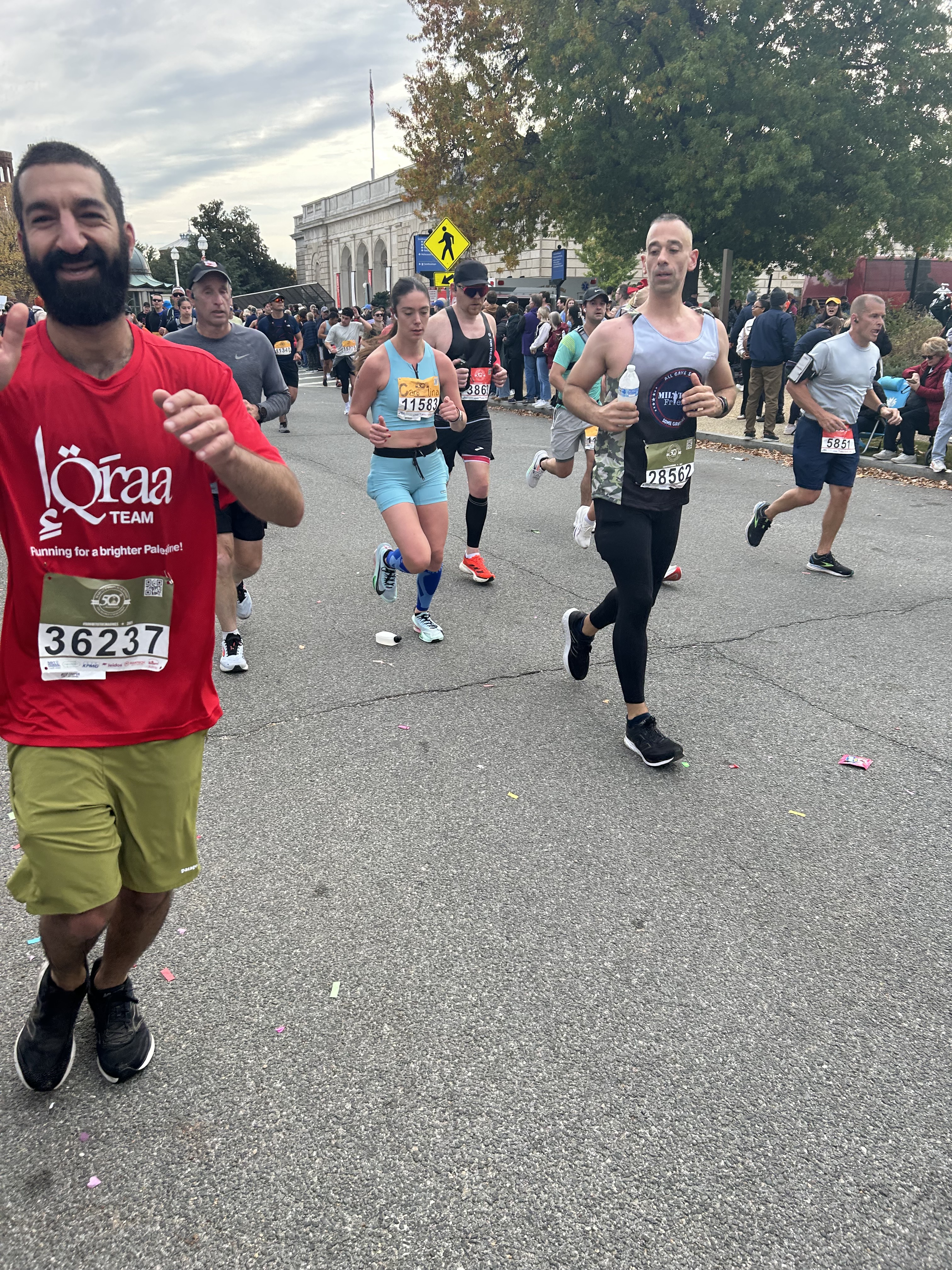
  • Last week/this week. Last Saturday at Columbia Island Marina, Basma, Cathy, Basel, Imad, Reza, and me ran or walked (photo) and Cathy talked about the Mental Game. This Saturday we’re at Reston, where marathoners will run 16 miles while half-marathoners run 9.   

Every life has a story and Awdah Hathaleen’s epitomizes so much of the injustice inherent in Zionism’s treatment of non-Jews. In 1948, with 750,000 other Palestinians, Awdah’s (his name means “Return”) grandparents were displaced from the Naqib/Negev to the Masafer Yatta area south of Hebron.

  •  Awdah, born a year after the Oslo Accords—the “two-state solution”—saw his family home demolished periodically for lack of a permit, while the illegal Carmel settlement continuously expands.
  • Awdah was inspired to nonviolent activism by his uncle, Haj Suleiman, a nonviolent activist killed by Israeli police in 2022. Awdah also taught English in the village school so the children could tell their story to the world, according to his cousin, Eid.   
  • Awdah documented settlers’ efforts to displace his family and village, and ultimately filmed his own killing on July 28 at the hands of a settler. The Israeli killer was freed within 3 days, while Awdah’s body was held for 10 days, and not released until the women of his village went on hunger strike, while many of his male relatives were detained.
  • Awdah contributed to the Oscar-winning No Other Land(2025)documentary, made largely of hand-held video that chronicled in fearsome intimacy the settler violence aimed at ethnically cleansing Masafer Yatta.   
  • Awda’s killer, Yinon Levi, was a known threat, sanctioned in 2024 by President Biden, who since October 2023 also ensured an uninterrupted flow of US arms and 7 US vetoes/no’s on Security Council resolutions seeking to constrain Israel’s cruel and deliberate violence in Gaza. Within days of his election, Trump, who campaigned—among many depravities–on deporting pro-Palestine activists, lifted the sanctions on Levi.  

What it means for Iqraa. It’s a salient point, made at dozens of Iqraa info sessions since 2008, that Iqraa is non-partisan: agnostic toward political parties and peace solutions; however, we’re not indifferent toward injustice.

For the many of us who prioritize a brighter Palestine in every arena—not solely through running:

  • We must stand for radical equality—if it’s “radical” to insist that Palestinian lives are equal to those of Israeli Jews—because every person has an equal right to life, freedom, and education.
  • For our moderate progressive friends who understand that racism is wrong: Zionism is racism. It privileges the rights and lives of one only people over all other people.
  • As we oppose racists, we must also oppose Zionists.
  • We needn’t fear offending our Jewish friends because those who are truly moral venerate the sanctity of life instead of worshipping the state of Israel.  
  • “Progressive except on Palestine” is racist and hypocritical. PEP does not take human equality seriously—radically—and progressives cannot selectively oppose racial supremacism.  

As Americans, our primary touchpoint for opposing Israel’s destruction of Palestine is through the tools of American foreign policy. This includes political movements, politicians, and activists. Our allies in this are not Zionists; in fact, they are anti-Zionists.

Running—and working—for a brighter Palestine…with freedom and justice for all.


« Previous Page