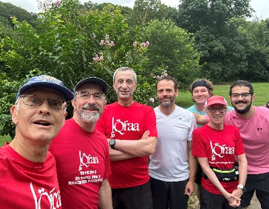
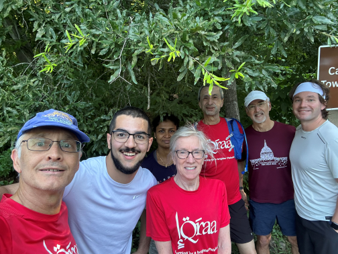
Please join us for our Iqraa holiday dinner at Mama Ayesha’s on Dec 5 at 6:30 pm.

  • All are welcome! RSVP to ensure we get a suitable table.
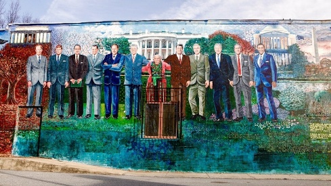
This week’s message is Bearing Witness, and several upcoming events (below) share  this theme. Like Iqraa’s holiday dinner, you’re welcome to participate in all of them.

Witness. First though, consider the connection between Western and Arabic words for “witness” that suggests the depth of commitment held by a Witness. The Greek term for ‘witness’ is ‘martys,’ and forms the root of the English word ‘martyr,’ while the Arabic word ‘shahid’ means ‘witness’ and is the root of ‘shaheed,’ which also means ‘martyr.’ One can lead to the other.

  • A witness is a person present at an event or who attests to what occurred.
  • A martyr is a person willing to suffer great sacrifice and even death for their core principles.

Rozana Healthcare Diplomacy. Tomorrow night (Nov 19) at 6 pm, my church, St John’s Norwood (6701 Wisconsin Ave) in Bethesda is hosting a Rozana roundtable on Healthcare Diplomacy. Rozana provides critical healthcare to Palestinians, in a partnership between Israelis and Palestinians.

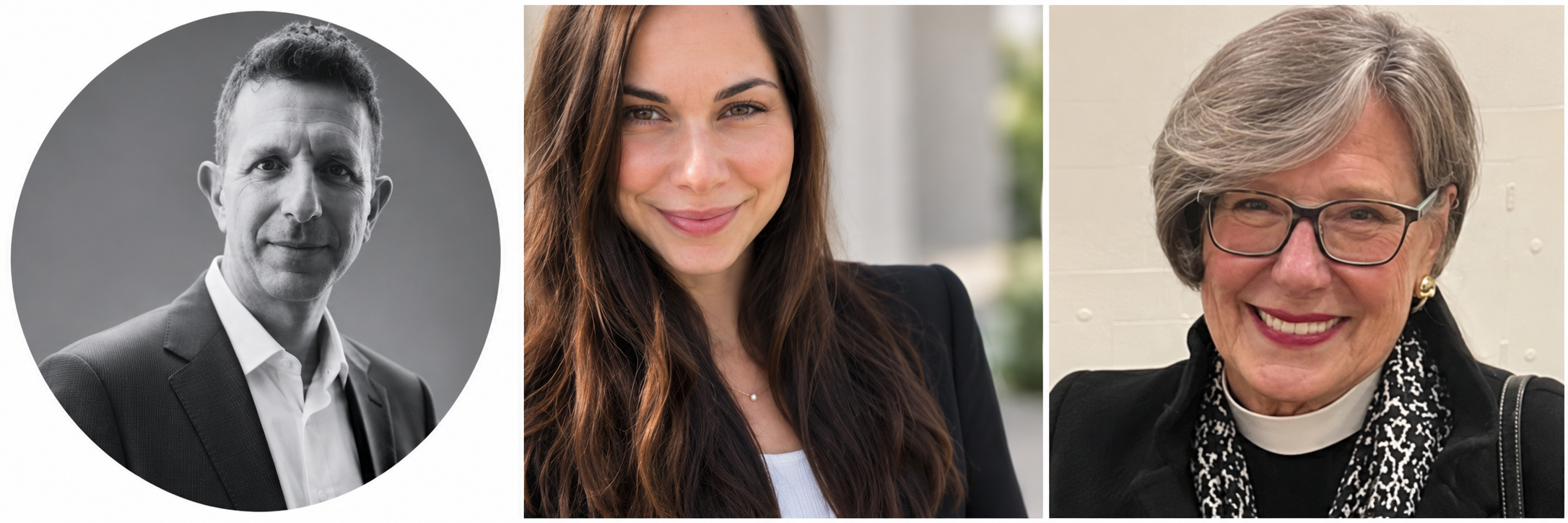
  • Speakers will include Ran Goldstein, Rozana’s Global CEO, Diana Shehade-Nama, Rozana’s Director of Fundraising, Marketing & Communications, and Rev. Anne Derse, Rozana Board member and our church’s Minister of Community Engagement, who’ll discuss her early Nov trip to Israel and the West Bank.
  • At a political level, Rozana’s work to begin reconciliation within Israel is not easy and—as long as it seeks to elevate Palestinians to equal status—is a form of bearing witness.
  • Notably, Israeli Palestinian political parties are engaging politically with counterpart Israeli Jewish parties to achieve limited aims—potentially a start toward equal partnership, according to Arab America: From unequal coexistence to partnership.
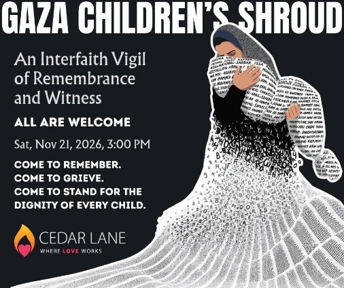
Gaza Children’s Shroud: Interfaith Vigil. Nov 21 at 3 pm, Cedar Lane Universalist Unitarian Congregation (9601 Cedar Lane) in Bethesda is hosting an interfaith vigil of remembrance and witness for the more than 20,000 Palestinian children killed in Gaza since October 2023, most of whose names are inscribed on an enormous white burial shroud.

  • Participants will view one panel of the shroud and bear witness to the innocence of these children and their unquestionable equality with all of God’s children.
  • The program will include a blend of prayers, music, and reading the children’s names aloud. For those who can’t join, it’ll be livestreamed: https://www.youtube.com/watch?v=79lTLX-rMRM
  • I’ve been asked to say a prayer as a representative of St John’s Norwood, and I hope you’ll join me in bearing witness.
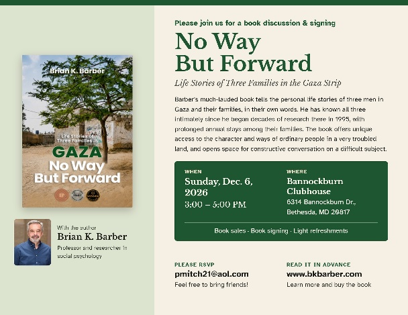
No Way But Forward. Dec 6 at 3 pm, Bannockburn Clubhouse (6314 Bannockburn Drive) in Bethesda is hosting a talk by social psychologist Brian Barber on his book, No Way But Forward, that traces the lives of 3 men and their families in Gaza over several decades.

  • This nonfiction work highlights Palestinian life in Gaza. The value Palestinians place on education was so prominent throughout the book that an entire Iqraa message (Iqraa 21 in September 2025) detailed the 3 families’ focus on this.
  • Brian’s frequent presence in Gaza over decades and steadfast advocacy for Palestinians through this book and in other forums epitomizes bearing witness.
  • Saleem Zaru, who bears witness through his leadership of United Palestinian Appeal—Iqraa’s partner for education—will moderate the book talk.
Bearing witness for a brighter Palestine.

Kirk


I started this message intending “Transition!” to mark my retirement from the Department of Defense last Friday, and to include a Mahmoud Darwish poem to mark the occasion. We’ll get to that.

But election night on Nov 3 highlighted a more significant Transition, including the election of many Americans who represented the “First” of their demographic group to serve in their position.

  • Firsts demonstrate to young people of varying ethnic and religious backgrounds and sexual orientation that they can pursue possibilities they hadn’t previously imagined.
  • Firsts also bring different intellectual perspectives into leadership, helping to bolster creative thinking and avoid groupthink.

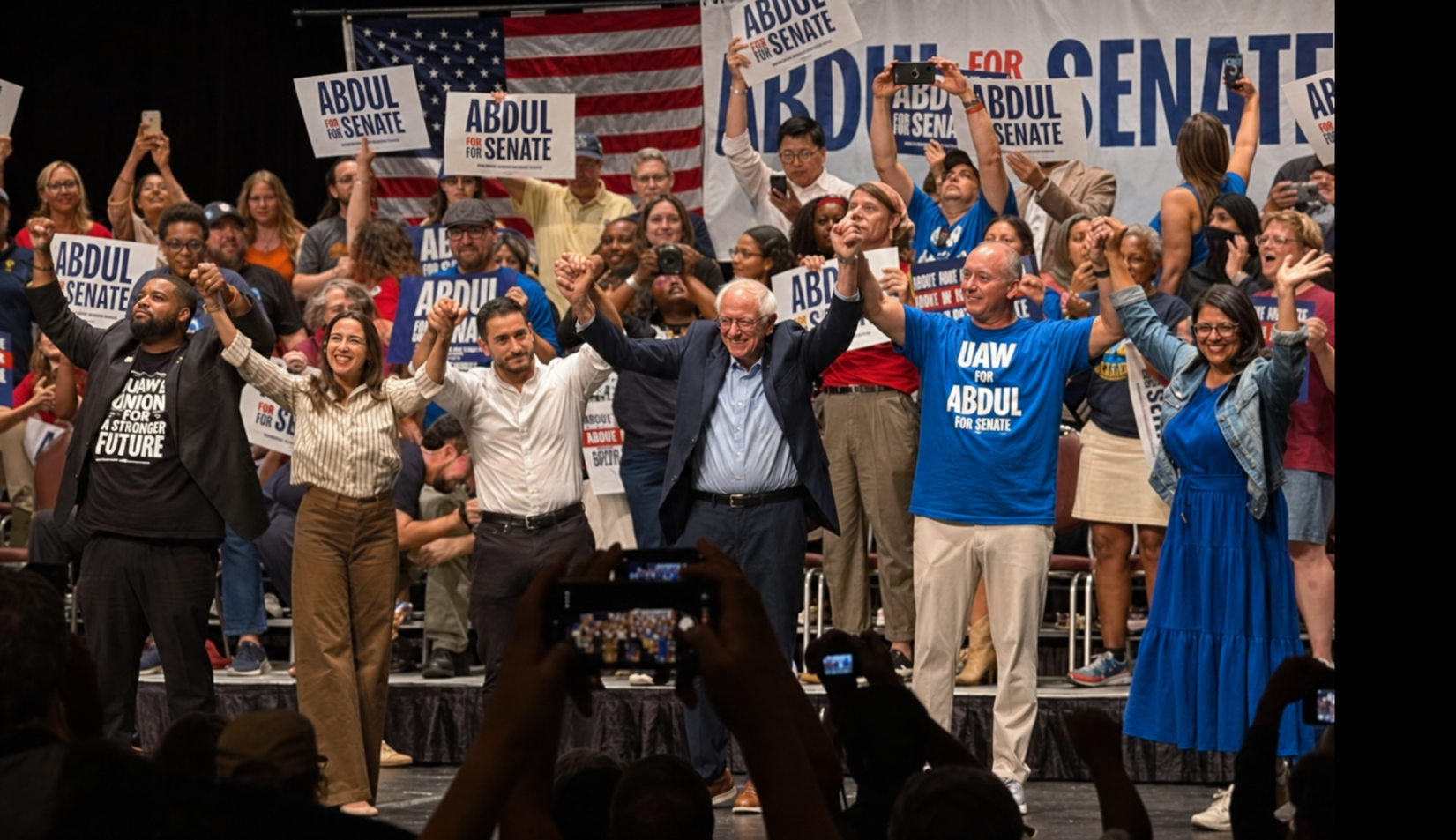
July 20 Detroit rally reflects wide-ranging demography of Palestine rights supporters, such as McKinney, AOC, AES, Bernie, Fain, and Rashida.

These attributes—new energy, different perspectives, and the coalition building minorities in particular engage in—are crucial for a society in need of reimagining itself and finding new avenues of growth—as vibrant societies must do. Among America’s Firsts on Nov 3:

  • Muslim Senator: Abdul El-Sayed (Michigan)
  • Openly gay male Senator: Chris Pappas (New Hampshire)
  • Native American female Senator: Peggy Flanagan (Minnesota)
  • Elected female Senator in South Carolina: Annie Andrews
  • Black female governor: Keisha Lance Bottoms (Georgia)
  • Black governors in their states: David Crowley (WI), Aaron Ford (NV), Byron Donalds (FL)
  • Latina governor of Texas: Gina Hinojosa
  • Native American female governor: Deb Haaland (New Mexico)

Before relaying what I passed on to my team upon retiring, I want to share Palestinian national poet Mahmoud Darwish’s “O water, be a string to my guitar,” as it captures feelings and images of transition. Darwish speaks of different and acute—societally traumatic–eras of transition, metaphorically visible in in the poem’s title, while painting images that apply to the passage of eras at personal as well as historical levels.

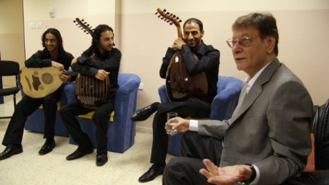
Darwish with the French Palestinian oud troupe, Le Trio Joubran, originally from Nazareth and compelled by Israeli restrictions to operate more from Paris and Ramallah.

O water, be a string to my guitar

O water, be a string to my guitar. The conquerors arrived,

and the old conquerors left. It is difficult to remember my face

in the mirrors. Water, be my memory, let me see what I have lost.

Who am I after this exodus? I have a rock

with my name on it, on a hill from which I see what’s long gone…

Seven hundred years escort me beyond the city wall…

In vain time turns to let me salvage my past from a moment

that gives birth to my exile…and others’…

To my guitar, O water, be a string. The conquerors arrived,

And the old conquerors left, heading southward, repairing their days

In the trashheap of change: I know who I was yesterday, but who will I be

in a tomorrow under Columbus’ Atlantic banners? Be a string,

be a string to my guitar, O water! There is no Misr in Egypt,

No Fez in Fez, and Syria draws away. There is no falcon in

my people’s banner, no river east of the palm groves besieged

by the Mongols’ fast horses. In which Andalusia do I end? Here

or there? I will know I’ve perished and that here I’ve left

the best part of me: my past. Nothing remains but my guitar.

Then be to my guitar a string. O water. The old conquerors left,

the new conquerors arrived.

My own transition. This week marks the start of my transition after officially retiring on Oct 30; it’s been 45 years since I joined the Infantry to serve in West Germany during the Cold War. After my 4-year military commitment, the remaining 41 years were dedicated to national security service in the Department of Defense as a Middle East analyst and/or graduate studies to better understand the Middle East.

In my retirement remarks to my team, which I was fortunate to share also with Shobila and a few friends from outside my workplace, I highlighted the need for a humanistic approach to the Middle East, based on better understanding the culture and perspectives of the region’s people and leading actors.

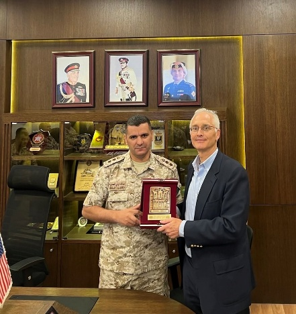
With a Jordanian counterpart in Amman (2023)

My remarks were organized around my emotions upon retiring, culminating with the case for a humanistic approach to analysis:

  • Living in the West Bank, Israel, and Lebanon as a boy filled me with wonder.
  • Serving with my teammates on our elite analytic unit was the honor of a lifetime.
  • It became clear across decades of service that every administration, Republican or Democratic, acts primarily on the basis of its domestic constituency’s wishes.
  • The civil-servant analyst’s role, regardless of policy outcomes, was to answer questions about trends, risks, and opportunities, and most importantly in accordance with the DIA credo, to speak Truth to Power.
  • The questions we addressed centered on political-military issues and military capabilities but understanding the perspectives of leaders and communities is key to a holistic understanding.
  • The context for these perspectives comes from understanding the people and their culture.
  • Most of my focus was on understanding the Arab and Muslim world; studying Arabic and traveling in the region were integral to that.
  • Cultural insights also come from reading literature—for instance, contrast Naguib Mahfouz’s Palace Walk trilogy written in the 1950s with Yasmina Khadra’s series written 50 years later that includes The Attack and The Sirens of Baghdad. And read non-fiction, of course.
  • For reading poetry, I offered Mahmoud Darwish as an example, and for film-viewing, The Battle of Algiers as a starting point.

My takeaways for my team highlighted Palestine’s importance to me. My bio for the retirement ceremony’s program—filled with pictures of travel in the region–mentioned founding Iqraa in 2008 to support Palestinian students, and my Farewell email to the Middle East Africa Regional Center noted that in retirement I’d be active on Palestine.

Now, as my Mom always said, we “Press on!”

Kirk


This week’s message features Samar’s reflections on her Marine Corps Marathon and a poem of pride in identity that is very relevant to this moment in history, Sajil Ana Arabi (Record! I am an Arab).

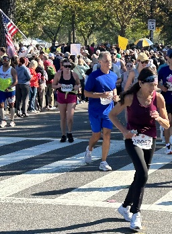
Rounding the corner at Mile 19

Samar’s thoughts after the MCM: Education: Allowing Palestinians a chance at life.

“I would like to say that it does get harder every year as our bones and muscles tire, but the feeling of exuberance remains, when you start and finish. All the miles in between are spent talking to yourself and saying you can make it. I listened to Arabic songs as I ran and looked at the fallen soldiers [the “wear blue” mile at Hains Point] whose lives were taken by useless wars some as late as October 26. The Marine Corps Marathon is never just a strain on your body but also on your mind because your thoughts have time to amply germinate. But the one thought that takes hold is that we are raising money for education and allowing Palestinians, under extreme stress and injustice from the cradle to the grave, to have a chance at life.

  • Running the numbers. Samar ran a 4:26.44 marathon, finishing 86th of 417 female runners in her age category, essentially, the top 20.6 percent of her group.
  • Favorite sign? “Mile 22.. never again. Mile 26.2, when is the next race?”

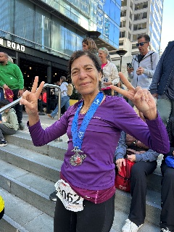
Wearing the MCM finisher’s medal!

The prerace MCM security restrictions have increased. Last year’s security restrictions have intensified. This year not only was the entire Camp Rosslyn area (the parking lot in front of River Place apartments) fenced off, but runners could not walk from Camp Rosslyn to the start line on Rte 110. Instead, we had to take the metro from Rosslyn to the Pentagon and then walk to the start line; beyond a certain point, only runners with bibs were permitted, so Samar had to walk the final distance to the start alone.

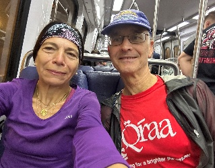
On the metro from Rosslyn to the Pentagon

In tribute to all our runners this year, here’s Mahmoud Darwish’s “Record! I am an Arab”… after a description of its relevance at this moment of rising racism and Islamophobia in America that matches the increasing Jewish supremacy in Palestine.

  • The poem reflects a pride in Arab identity that every Iqraa runner shares. We share this pride not only because of our near 20-year focus on elevating the prospects for Palestinians, but because we recognize the overlap of ethnoreligious supremacist threats—Christian nationalists in America and Jewish nationalists in Palestine—is a threat to all.
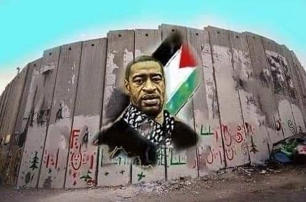
  • We seek nothing less and nothing more than equality. But we insist on it. Neither White supremacy nor Zionism—which privileges the lives and narratives of Israeli Jews over all others—are acceptable, nor is anti-semitism. Palestinians recognize these principles more personally than most Americans, and created murals of George Floyd on the separation wall in the West Bank.

Rashid Khalidi described Darwish as one of the finest poets of his entire generation—in Palestine certainly. Born in Mandate Palestine in 1941, he experienced expulsion, flight, and the loss of his home as a small child. He grew up in the Galilee, an “internal refugee” in a village near his destroyed birth village of al-Birwa. His education included time in an Israeli prison where in 1964 he wrote one of his most famous poems, “Sajjil ana ‘arabi” (“Record! I Am an Arab”; it was published in English under the title “Identity Card”).

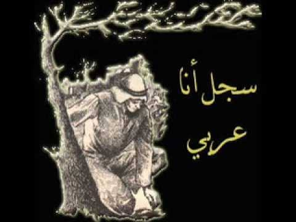
The Arabic text next to this farmer translates as “Record! I am an Arab.”

Identity Card

Record!

I am an Arab

And my identity card is number fifty thousand

I have eight children

And the ninth is coming after a summer

Will you be angry?

Record!

I am an Arab

Employed with fellow workers at a quarry

I have eight children

I get them bread

Garments and books

from the rocks..

I do not supplicate charity at your doors

Nor do I belittle myself at the footsteps of your chamber

So will you be angry?

Record!

I am an Arab

I have a name without a title

Patient in a country

Where people are enraged

My roots

Were entrenched before the birth of time

And before the opening of the eras

Before the pines, and the olive trees

And before the grass grew

My father.. descends from the family of the plow

Not from a privileged class

And my grandfather..was a farmer

Neither well-bred, nor well-born!

Teaches me the pride of the sun

Before teaching me how to read

And my house is like a watchman’s hut

Made of branches and cane

Are you satisfied with my status?

I have a name without a title!

Record!

I am an Arab

You have stolen the orchards of my ancestors

And the land which I cultivated

Along with my children

And you left nothing for us

Except for these rocks..

So will the State take them

As it has been said?!

Therefore!

Record on the top of the first page:

I do not hate people

Nor do I encroach

But if I become hungry

The usurper’s flesh will be my food

Beware..

Beware..

Of my hunger

And my anger!

~Mahmoud Darwish

Darwish in his youth (1941-2008)

“Teaches me the pride of the sun

Before teaching me how to read”

Kirk

Updates this week on races featuring Alejo and Samar, and Samar’s poem about olive trees, plus one last huge thanks to our volunteers at last Saturday’s Potomac River Run on the C&O towpath.

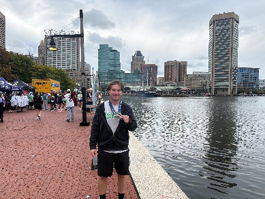
First, kudos to Alejo, who ran the Baltimore Half last Saturday (Oct 17); it’s a nearby race that’s a lot of fun. Here’s Alejo’s pithy summary and a post-race picture: “Great race in Baltimore! Perfect running weather and amazing atmosphere!”

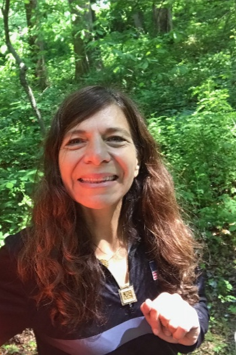
And we wish Samar, our 2026 Marine Corps Marathoner, all the best in her race on Sunday (Oct 25). Samar first ran with Iqraa in 2013, and has returned frequently as a runner and volunteer. She’s also a poet as you’ll see next.

Intro: A Letter from the Outside. This poem by Samar is especially timely because it’s olive harvest season in Palestine. Here’s her explanatory note:

  • “The Israeli occupation has targeted olive trees, a prime symbol of not only Palestinian food sovereignty and security but also identity and heritage. The deliberate uprooting, burning, chopping, and desertification of groves is a common tool used by Israeli settlers to destroy the livelihood of Palestinian farmers who have tended to their trees for generations as a source of income and nutrition. The targeting of olive trees is an example of how Israel uses ecocide to change the landscape of Palestine. Since 1967, over 1 million olive trees have been destroyed. Israeli settler attacks not only destroy olive trees but often also murder the famers who sacrifice their lives to protect them.

A Letter from the Outside

When you told me how soldiers marched with their sullied boots,

trampling the prayer rugs where you knelt a thousand times,

next to the quiet presence of uncles and brothers during Salat Al Fahjer,

I felt the alarmed wails of prophets stirring in their tombs.

When you showed me broken bricks of demolished homes,

suspended staircases ascending to nowhere,

and said, “We will rebuild with better stones,”

I tasted the cold winds of destitution but, in you, found hope.

When you pointed to the wall that choked the farms from their aquifers,

denying farmers access to their land, schoolchildren to their schools,

shopkeepers from their shops, and turning markets into ghost towns,

I remembered our grandparents and how lonely they died, without laughter.

When you told me that the elephantine trunks of olive trees,

which had stretched across the hills since Roman times,

now stood like charred effigies on the earth your father tilled,

I felt the sting of fire on my own skin and wept with you.

And when you said the olive tree does not die if its roots remain,

“It is your life,” you told me.

“The child you nurse if the earth thirsts for rain

The trunks you defend with lioness rage.

The broken branches you gather in tenderness.

It is the ripening of wisdom after a stolen harvest.”

I knew you held the power of the strongest love in your palm.

~Samar Najia

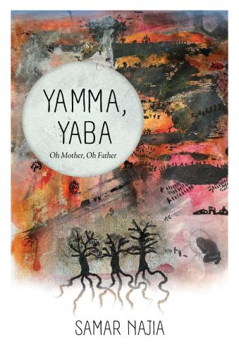
Order the book (illustrated by Leigh El-Hindi) from Politics and Prose: Order Yamma, Yaba

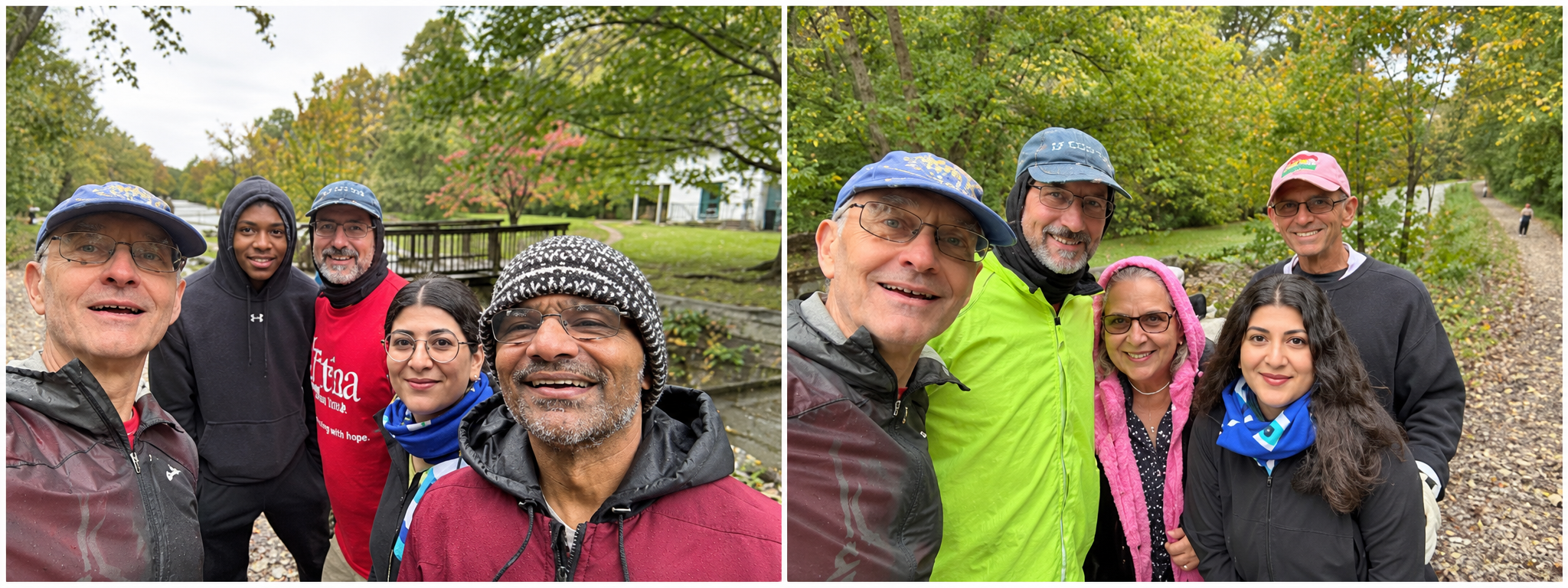
Many thanks to our Potomac River Run volunteers from last Friday and Saturday on the C&O towpath! It was a tremendous team effort and apologies for not capturing everyone in the pix.

  • Iqraa volunteers: Bill, Herschel, Khaled, Mary, Mazen, Shobila, Sima, Siva, Tom. and me.

Ya’teekum al-‘afiya! God give you strength!

Kirk


On this widely marked anniversary

we pray for all who have died.

We pray most ardently for an end to injustice and oppression.

We strive toward equality, dignity, and freedom for all people

and recognize that ending injustice

is the precondition for these rightful blessings.

This week…best wishes to another racer, an op-ed highlightling the importance of educational freedom, and a new fundraising template…

Good luck in Chicago! Cathy is running her marathon in the windy city on Oct 11 and we wish the best to one of our outstanding marathoners, a frequent volunteer, and a member of the Iqraa team since 2010. Go Cathy!

Education—what’s the big deal?! Ehab Jabareen in Al Jazeera tackles Israel’s continuous effort to de-Palestinize Palestine’s educational curriculum—literally to eliminate Palestinian national consciousness from Palestinian textbooks.

  • The importance of providing educational opportunities for Palestinians is highlighted by Israel’s counterefforts. Judging from the article, Israel has had success in changing textbooks in areas that it physically controls such as East Jerusalem and in areas where it has largely destroyed the Palestinian education system and can exerts pressure on Western donors who seek to prop up what remains, such as in Gaza.
  • “The struggle over Palestinian textbooks is not only about what children should learn. It is also about who has the authority to decide what counts as legitimate history in the first place.”
  • Here’s Jabareen (pic too): “Why Israel is Interfering in Palestinian Education”

Fundraising template. My fundraising message from last month represents a new perspective (for me) since I’m not running a race this year. As a result, instead of framing the message around a race, it’s pitched on my effort to fulfill the Iqraa mission by promoting education.

  • For each of us, I think it’s true that the most important aspect of your appeal is to express in your own voice why the cause is important to you and explain how people can support it.

Begin msg:

Dear Iqraa friends,

I’m writing later than usual this year, as I’d hoped to compete in a triathlon for Iqraa and was holding out for a medical evaluation that my hamstring had healed. Unfortunately, it’s not yet fully healed.

While I usually link my request for your support to my race, this year I’m simply asking you to support Iqraa (“Read!”, in Arabic) because of our educational mission, work that I’ve invested in every year since 2008. Next year will be our 20th of “Running for a brighter Palestine!” (the slogan on our running tee).

  • Iqraa partners with United Palestinian Appeal (UPA), a 501(c)3 charity in Washington DC that oversees and implements a university scholarship program to provide tuition to Palestinian students at 23 eligible universities in Gaza, the West Bank, and Jordan.

I also use the Iqraa platform—weekly emails through most of the year—to educate our own community. Much of this is simply basic tips for our runners, including running in hot weather, stretching, and race-day prep. But often the themes are broader, such as the importance of education to Palestinians—it is greatly valued! —and the importance of Americans standing up for equal rights for all, which for integrity’s sake means for Palestinians too.

Since October 7, 2023, when it’s often difficult to provide positive and inspirational thoughts in the Iqraa message, I’ve found strength and insight in Palestinian poetry and culture, and purpose in sharing poems and associated art with our community. Poems and art are beautiful paths toward education.

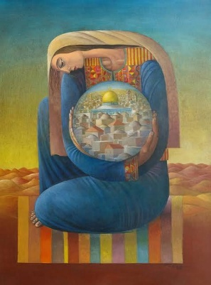
  • Sliman Mansour’s “Woman Carrying Jerusalem” (1979), which my church used to promote “An Afternoon of Palestinian Culture,” a free, public event in March featuring history, poetry, music, Palestinian dance, and embroidery. Mansour died in East Jerusalem on August 24 of this year.

Although the situation in Palestine continues to deteriorate, there are signs of hope elsewhere. Most uplifting is the widespread grassroots awakening to the terrible injustice that Zionism—which privileges the lives and narratives of Israeli Jews over all others—has inflicted for decades on the Palestinians indigenous to that land.

Whether this global awakening persists and can be transformed into policies supporting justice and peace depends largely on education, educating Palestinians and educating Americans.

Education for Palestinians is the foundation of their future ability to serve in professions that uplift society, including medicine, dentistry, computer engineering, physiotherapy, nursing, agriculture, teaching, and business administration. These are some of the current fields of study in UPA’s scholarship program. University education will also enable Palestinians to better represent themselves in a world in which they’ve too long been marginalized.

To press on for a better future—”a brighter Palestine,” I ask you to support our educational efforts, partnered with UPA.

I appreciate your friendship, support, and solidarity.

Kirk Campbell

End msg.

We have great appreciation for our Oct 17 vols for the Potomac River Run (next Saturday)!

  • Iqraa volunteers are Bill, Herschel, Imad, Khaled, Mary, Mazen, Shobila, Sima, Siva, and me.

This week/new time: We’re at Columbia Island Marina at 8 am and running 12 miles (marathoners). Half-marathoners can pick a distance (no designated distance for you).

Friends, let’s strive for justice and run for a brighter Palestine.

Kirk


Congratulations are in order and then History…

First, this week, kudos to Janet and Bilal for persevering over the Parks Half last Sunday (Sept 27).  Our Iqraa runners enjoyed the run, said the weather was perfect, and thanked the team. Here they are after collecting their medals. Iqraa congratulates them both!

Bilal and Janet, Parks Half medalists!

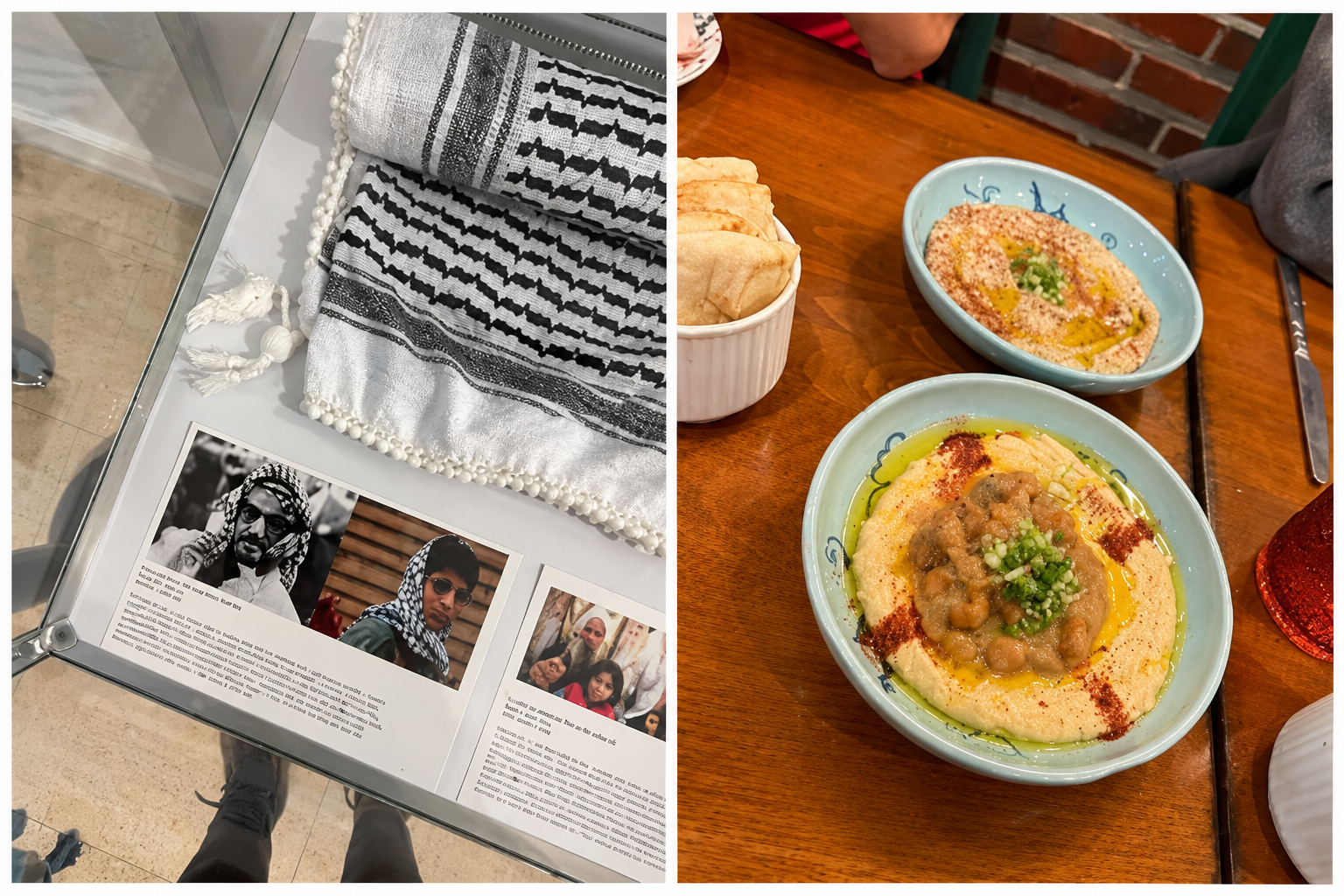
Museum of the Palestinian People. Last Saturday, we had a terrific post-run educational visit to the Museum of the Palestinian People. Our docent, Mohammad Khalaf, shared these two takeaways for this message.

1. Palestine and the Palestinians. This is from MPP’s manual for docents, which uses several sources listed below as recommended reading.

  • The Palestinians are a people with roots spanning over 4,000 years with ties to historic Palestine dating back to the Canaanites, the foundation of ancient ancestry of the Palestinians along with many other civilizations, empires, pilgrims and migrants who have left their mark on the people, the cities, the crafts, foods, traditions, and historical sites. Palestinian identity is also rooted in the land of historic Palestine.
  • The holy land has always been an essential aspect of the identity of the Palestinians. For generations, the Palestinians welcomed immigrants and pilgrims to the land across religions and have also welcomed migrants fleeing religious persecution. The Palestinians rejected Zionist immigration on the basis of its political agenda: to replace the indigenous Palestinian inhabitants with Zionist settlers with the intent of establishing a majority Jewish state at the expense of the non-Jewish Palestinians.

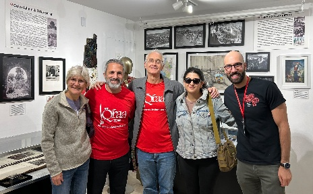
Iqraa crew at the MPP with our docent, Mohammad Khalaf (R)

2. How Palestinians experience Israeli occupation. This is Mohammad’s description of the military occupation, which he always covers in his tours: “The Israeli occupation manifests itself in different ways for Palestinians, depending on their demographics and geography.” Further:

  • Palestinians from Jerusalem are effectively stateless, holding only permanent residency in Israel and constantly fearing the loss of that status due to numerous policies designed to displace Palestinians from the city.
  • Palestinians holding Israeli citizenship are treated as second-class citizens, facing discrimination under more than 50 laws, according to human rights organizations such as Adalah. Israel’s 2018 Nation-State Law declares that Israel is “unique to the Jewish people” and downgrades Arabic from an official language.
  • Palestinians in the West Bank are restricted from accessing much of the region and face security checkpoints that control their everyday movement. They also face government-ordered land confiscation to expand Jewish settlements, which are illegal under international law, as well as violent attacks by armed settlers who invoke a biblical claim to the land to justify their actions.
  • Meanwhile, Palestinians in Gaza experience life in an open-air prison, enduring indiscriminate shelling and airstrikes on residential areas.
  • Palestinian refugees and their descendants continue to be denied the right of return to their ancestral lands. They were forcibly dispossessed during the Nakba (Catastrophe) of 1948 and the Naksa (Six-Day War) of 1967. Despite these hardships, Palestinians remain a resilient people and will continue to survive as a people in the face of adversity.

Recommended readings. Mohammad said these are recommended for MPP staff to read; they also source MPP’s docent document.

  • The Hundred Years’ War on Palestine: A History of Settler Colonialism and Resistance, 1917–2017. Rashid Khalidi
  • Palestinian Identity: The Construction of Modern National Consciousness. Rashid Khalidi
  • One Palestine, Complete: Jews and Arabs Under the British Mandate. Tom Segev
  • The Ethnic Cleansing of Palestine. Ilan Pappe
  • Israel’s Apartheid against Palestinians: Cruel System of Domination and Crime against Humanity. Amnesty International
  • Palestine, A Four Thousand Year History: Nur Masalha
  • Palestinian Rituals of Identity, The Prophet Moses Festival in Jerusalem, 1850-1948: Awad Halabi
  • Rediscovering Palestine, Merchants and Peasants in Jabal Nablus, 1700-1900: Beshara Doumani
  • Bethlehem, Biography of a Town: Nicholas Blincoe
  • Jerusalem, History of a Global City: Vincent Lemire, Katell Berthelot, Julien Loiseau, Yann Potin
  • All That Remains, The Palestinian Villages Occupied and Depopulated by Israel in 1948: Walid Khalidi
  • Encyclopaedia Palestinnica: Dr. Mohammad H. Ghosheh
  • The Storyteller of Jerusalem, The Life and Times of Wasif Jawhariyyeh, 1904-1948: Wasif Jawharriyyeh, Edited and Introduced by Salim Tamari and Issam Nassar
  • The Revolution of 1936-1939 in Palestine: Ghassan Kanafani

After the MPP (L: depicted: Arafat, Khaled), Bilal treated us at Nabiha’s (R)

Friends, we need two volunteers: one each for Oct 16 (Friday; logistical prep) and Oct 17 (Lock 7 aid station) for a race on the C&O towpath. Lmk if you want to be a hero!

  • Thank you to our volunteers thus far: Bill, Herschel, Mary, Shobila, Siva, and me.

This week: We’re at Carderock and running 8 miles (marathoners) and 4 miles (half-marathoners). And thank you to Cathy for offering to bring the food for our post-run recovery!

You and me got a whole lot of history

We could be the greatest team that the world has ever seen

So don’t let it go, we can make some more

We can live forever.

~One Direction (History, 2015)


This week we’re featuring two poems from Zeina Azzam, a Palestinian American poet, community activist, and Iqraa alum. And please note the public service announcements between Zeina’s poems.

Poet laureate. Zeina was the poet laureate of Alexandria, VA, for 2022-25, and has authored several poetry books, which can be ordered on her website. Her professional career focuses on education and Middle East affairs, including 27 years at Georgetown’s Center for Contemporary Arab Studies and her current work as poetry editor for We Are Not Numbers.

The idea behind Zeina’s first poem: “One day it struck me how central the concept of KHAYR, the Arabic word for goodness, is to Arab culture. The Arabic word khayr is uttered often during each day. How lovely is it that one of the major touchstones of our lives is the idea of goodness, and we use it in our speech and with each other all the time!

Khayr

From the time farmers rise with the sun

until night descends, there is talk of it—

songs and Qur’anic verses about khayr,

morning of khayr, evening of khayr.

There is no getting around goodness.

Tisbahi ala khayr, my mother would wish me

as she kissed my forehead at bedtime:

may you wake up to goodness. Later I learned

to respond: w’inti min ahlo, may you be

part of its family—the family of khayr.

Even watching TV, as we waited for bad

news from Gaza, she would admonish,

khayr inshallah! Goodness, God willing!

No matter the misfortune, she was sure Allah

would eventually bring khayr to Palestine.

Maybe it all started with her neighbors

in Jaffa, the family whose name was

Khayrallah, God’s goodness. From kindness

to comity, their ancestors packed so much

in this name: it was a hedge against hardship,

an incantation in their bones—Palestine’s

bones—where khayr resides from morning

till night, in a mother’s kiss at bedtime, deep

in a farmer’s land. There, the roots of khayr

multiply in the earth, goodness bristling.

Zeina Azzam. Originally published in Mizna: The Palestine Issue (2019) and included in Zeina Azzam, Some Things Never Leave You (Tiger Bark Press, 2023).

Public Service Announcements: we have four PSAs that distill into Volunteering and Learning.

  • Volunteer. We need a few more volunteers for the Sept 5 Abebe Bikila International Peace Marathon and Half on the C&O towpath (adjacent to Canal Rd). Let me know if you can be one.
    • On Sept 4 (Friday), Help with logistics (loading/moving supplies). This is our biggest need at the moment.
    • On race day Sept 5 (Saturday), Volunteer for aid station support (giving Gatorade/water to runners), or logistics (loading/moving supplies).
    • Thank you to volunteers thus far: Bilal, Bill, Cathy, Greg, Nourman, Shobila, Tom, and me.
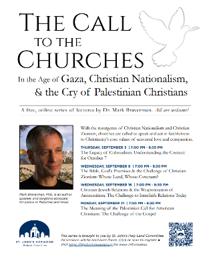
  • Learn. Free Zoom series hosted by my church, featuring Mark Braverman: Sept 3: colonialism…the context for Oct 7; Sept 9: the challenge of Christian Zionism; Sept 16:  Christian-Jewish relations and the weaponization of antisemitism; Sept 21: the Palestinian call to American Christians.
  • Learn. Book review. This is the correct link (last week’s malfunctioned) to my review in Mondoweiss of Ramsey Hanhan’s book: Book review: Palestine Bleeds For You
  • Learn: Museum of the Palestinian People. We started this tradition last year and paired it with a trip to the nearby Nabiha’s restaurant. It became a good, educational afternoon and an opportunity to talk together. We’ll meet after one of the 12-mile runs, on Sept 19 or 26.

End PSAs

Hope for Gaza. Zeina shared her thinking that led to this second poem.

“When a friend asked me to write a hopeful poem about Gaza, I realized how much of a challenge I faced. I feel profound grief and despair (and rage) as the genocide continues to unfold in Gaza since 2023. Then I came across an essay by the Palestinian pastor, Rev. Munther Isaac. He was the one that constructed the “Christ in the Rubble” scene at Christmas Lutheran Church in Bethlehem, and in 2025, the church added a Christmas tree coming out of the rubble. Rev. Isaac saw the tree as symbolizing “defiance in the face of death. It is hope planted where despair is expected to rule… We live amid ruins, yet we insist on life. We bury our dead, yet we plant trees.” His moving words inspired me to write this poem.

We Plant Trees in Genocide

“We bury our dead, yet we plant trees.”—Rev. Munther Isaac, Palestinian Christian Pastor in Bethlehem, West Bank, Palestine

The earth knows us. We trust soil, sun, rain.

On this same land, bombs land.

We bury our dead. We bury our trees.

Yet our children gather seeds.

They ask us to imagine oranges and pears.

We are summoned by the name of cactus fruit: صبر sabr, patience.

And fists will open, will plant.

Our ancestors, at peace in death: the roots, the love we know.

They are the earthworms, minerals, oxygen,

old branches and stones anchoring trees.

In our homeland we thirst for water and light.

We dream of farming, even in hunger.

Below, tears and breaths mingle, a helix in the soil.

Hopeful tendrils curl toward the sun.

©️Zeina Azzam. Published in Caroline Bock & Jona Colson, eds., Capital Love (Washington Writers’ Publishing House, 2026).

Last week/this week: last week we ran at Columbia Island Marina and this week we’re at Reston for 16 miles (marathoners) or 9 miles (Half). Please sign up by Thursday each week so the host charity can plan for refreshments.

Friends, hope lives through action—whether serving water to runners, planting trees for Gaza, or running for a brighter Palestine—and there is always so much more that we can do.

As in a long run…pace yourself, lean forward, and never quit.

Kirk


One PSA on Race Support and then our main message on Education.

  • We’re supporting the Sept 5 Potomac River Run on the C&O towpath (next to Canal Rd), our final race this year, and we need volunteers.
  • Our volunteers make a difference. Providing race support is one of the ways we raise money for education; we get a share of the proceeds IAW the volunteers hours we invest in the race.
    • On Sept 4 (Friday), we need help with logistics (moving supplies) and preparing race packets (assembling goody bags).
    • On race day Sept 5 (Saturday), we could use help with traffic flow (directing traffic), aid station support (giving Gatorade/water to runners), and logistics (moving supplies).

Education (hurdles): Violence. We all know the importance of education to Palestinians even if simply by reflecting on our own experience. Jewish Currents featured an early July article about the difficulties faced by educators and students in the West Bank–The War On Palestinian Schools–where Israeli settlers supported by soldiers attack Palestinians increasingly and with impunity. The JC article notes:

  • “Destroying educational infrastructure and continued attacks on teachers and learners impacts communities from developing and building identity,” according to Yusuf Sayed, a professor of global education policy at Cambridge University.
  • “An attack on education is an attack on the ability of a society, a community, or a nation to reproduce itself in various ways: through its ideas and identity, but also through the doctors, lawyers, engineers, and teachers needed to reboot,” Sayed explained.

Education (hurdles): Finances. The JC article also highlighted financial aspects of Israel’s obstruction of education; in addition to its violence, Israel has reduced tax transfers, forcing schools to operate just 3 days a week.

  • “Israel deducts the amount the PA compensates families of Palestinian prisoners and those killed by Israeli forces” from the amount Israel transfers after collecting Palestinian taxes.
  • The amount Israel withholds on these grounds has grown from $1 billion during the period 2019 to mid-2024 to $4.5 billion during the period from October 2023 thru 2025. At the same time, foreign aid is at historical low points.0 Aid to the PA was just $358 million in 2025, compared to $2 billion in 2008.

PSA:

For runners trying to create your fundraising page (choose “be a fundraiser” and “as individual”):  https://act.upaconnect.org/campaign/support-team-iqraa-2026/c771208

For runners wanting to register for the training program (choose “$30” and “Iqraa”): MCC summer training program

Thanks to Imad for hosting last Saturday’s training run. If you’d like to feed the runners—mini bagels, hummus, fruit, and the like—we host again this Saturday (Aug 1); all will be grateful for your generosity.

End PSA…

Education—human capital—is the key to the future. Friends, no panacea here. Education is the source of Palestinian intellectual wherewithal and thus the key to rebuilding within a free and equal society. To get to freedom and equality, education is crucial and more broadly than in Palestine. Americans have to learn about the oppression supported by our tax dollars and understand that “everyone is equal” includes Palestinians.

Saleem Zaru, Ex Dir of UPA

  • We’re fortunate to have good friends at UPA such as Saleem, and Tabitha, the UPA staffer on point for Iqraa.

Education: UPA-Iqraa partnership. Here are key aspects of what we’re helping UPA achieve through the Mahmoud Darwish university scholarship program (UPA data):

  • UPA has 23 partner universities with 105 active students, 57 in the West Bank, 36 in Jordan, and 12 in Gaza.
  • The universities include Al Azhar University (Gaza), Al Quds University (Abu Dis), Birzeit University , Palestine Polytechnic (Hebron); and in Jordan, University of Petra and Jerash University, among others.
  • Degrees/career paths include medicine, dentistry, computer engineering, physiotherapy, nursing, agriculture, teacher, and business administration.
  • Scholarship amounts/cost; you can see the cost in the WB is rising.
    • In Jordan and Gaza, the scholarship amount is $500 per semester ($1,000 per year).
    • For old students in the West Bank, it is $500 per semester ($1,000 per year).
    • For new students in the West Bank, it is $700 per semester ($1,400 per year).

That’s the big picture. Here’s what the scholarship program means for Saarah (name changed for privacy), who’s 22 years old and studying Medicine at Al Azhar University in Gaza:

“When I was younger, I never dreamed of becoming a doctor. My greatest goal was simply to make my family proud. But during my senior year in high school (about five years ago), our neighborhood was heavily bombarded, and I watched people being pulled from beneath the rubble. In that moment, I realized I wanted to be someone who could help save lives, and became determined to earn the grades I needed to study medicine—not only to make my family proud, but to serve my community.

In Gaza, doctors are forced to make impossible decisions every day: either to save their own lives and leave their patients behind or risk their lives to save those around them..

The Mahmoud Darwish Scholarship program has been a major support. During the shift to online learning, internet access was very difficult, and I had to walk for about an hour just to reach a place with connection so I could download lectures and take my exams. When in-person learning resumed, it felt like life was returning and there was still hope. I began attending university classes, sitting among other students and engaging in lectures. The scholarship allowed me to continue my studies when I would have had to repeatedly pause it otherwise due to financial hardship. When I learned that I received this scholarship, I was overwhelmed with joy—it gave me the motivation and drive to keep going even in the hardest circumstances. Just as my community gave me education and support, I want to give back and serve it in return.”

Last week/this week: last week we ran at Peirce Mill (we had 8 including one unpictured), and this week we’re at Candy Cane Park for 14 miles (marathoners) or 6 miles (Half).

Help us support more young students like Saarah.


We commemorated our Independence Day with a quiet out-of-town getaway and by considering the meaning of Independence in the context of our history and Palestine’s.

Several years ago, inspired by a seminar at my church (thank you, Bill and Lisa) about Frederick Douglass and his speech, “What To the Slave Is The Fourth Of July” (1852), the Fourth of July Iqraa message began examining the status of Palestinian liberty.

  • To grasp that inspiration, here’s Democracy Now’s version, featuring James Earl Jones

This year, as one who long enjoyed NPR’s annual reading of the U.S. Declaration of Independence, it seemed appropriate to look at the Palestinian Declaration of Independence.

In context: The Palestinian Declaration of Independence (hereafter, Declaration) was written by national poet Mahmoud Darwish, approved by the Palestine National Council, and read aloud by Yasser Arafat on Nov 15, 1988, in Algiers.

  • It explicitly accepted two states. Three weeks later (Dec 8), in response to a U.S. request, Arafat clarified that these were Palestine and “the Jewish state of Israel.”
  • To this day, while nearly 160 of 193 UN member states formally recognize Palestinian statehood, Israel and the United States do not.
  • Even so, Zionists—privileging the lives and narratives of Israeli Jews over all others—shamelessly use this litmus test for “antisemitism” and for whether a non-Zionist can participate in discussion over Palestine’s future: “Do you accept Israel’s right to exist?”

The Declaration. The three short sections below comprise thoughts/takeaways from the Declaration, followed by centered and italicized text of verbatim passages.

1. From its opening words, the Declaration acknowledged the land’s diversity and cultural richness, including the three faiths that share it, and the indigeneity of Palestinians.

Palestine, the land of the three monotheistic faiths, is where the Palestinian Arab people was born, on which it grew, developed and excelled…

Nourished by an unfolding series of civilizations and cultures, inspired by a heritage rich in variety and kind…The call went out from Temple, Church and Mosque to praise the Creator, to celebrate compassion, and peace was indeed the message of Palestine.

Sliman Mansour, Mother of the Martyr (1983)

2. The Declaration called out the falsehoods of Zionism—such as “a land without a people for a people without a land”–and the hypocrisy of the international state system, which determined Palestinians’ fate while rejecting their presence.

  • The term “Palestinian” appears once in the League of Nations’ (LN) Palestine Mandate of 1922—in describing “acquisition of Palestinian citizenship by Jews.” In contrast, the Zionist Organization and Jewish agency were formally recognized in the LN’s Palestine Mandate and the word “Jew or Jewish appears 15 times.
  • If it’s ever fair to think “the fix is in,” well…this was a fair thought more than 100 years ago.

Context for the Declaration (below) highlighting the LN (1919) and the Treaty of Lausanne (1923):

  • LN Article 22 “provisionally recognized” the independence of Ottoman communities’ (such as Palestine) while entrusting their “tutelage” to the British Mandate. But the British Mandate promised the land for a Jewish national home, a promise made by Balfour in 1917.
  • The Lausanne Treaty ended Turkish sovereignty over Palestine, essentially rewriting the terms of the Treaty of Sevres (1920) to gain Turkish nationalist buy-in for the British Mandate.

“…the falsehood that ‘Palestine was a land without people.’ This notion was foisted upon some in the world, whereas in Article 22 of the Covenant of the League of Nations (1919) and in the Treaty of Lausanne (1923), the community of nations had recognized that all the Arab territories, including Palestine, of the formerly Ottoman provinces, were to have granted to them their freedom…

3. The Declaration carried the optimism of the first Palestinian intifada (“shaking off”), then underway for a year (it began in Dec 1987). Its authors couldn’t have anticipated that the occupation and denial of their freedom would continue to this day.

The massive national uprising, the intifada, now intensifying in cumulative scope and power on occupied Palestinian territories…have elevated awareness of the Palestinian truth and right into still higher realms of comprehension and actuality…The intifada has set siege to the mind of official Israel, which has for too long relied exclusively upon myth and terror to deny Palestinian existence altogether…the history of Palestine has therefore arrived at a decisive juncture.

Regarding the U.S. relationship to Palestine, Abraham Lincoln’s 1859 letter to a friend may best capture the expectation of many: “Those who deny freedom to others deserve it not for themselves and under a just God cannot long retain it.”

The spirit behind this sentiment is universal, widely known as karma, and is biblically familiar in the phrase, “You shall reap what you sow.” But in Lincoln’s letter, the moral faultline is more specific: the freedom-denying sentiment came from “the vanguard…of returning despotism.”

Understanding this moral faultline and confronting that despotic vanguard is our own “decisive juncture” and it’s intrinsically connected–by the values inherent to cherishing Liberty–to our approach to Palestine.

Kirk


Two public announcements before the main message on higher education’s receptivity to the “radical” idea that Palestinians are and of right ought to be equal and free.

Looking for hosting help on Saturday at Candy Cane Park:

  • I’ll bring water and Gatorade. Let me know if you can bring food and be at home base.

Friends, you’re doing great at signing up for the run weekly!

  • Aim to do this by Thursday because that’s when Doug sends the email to coaches and charity coordinators so we how many runners to expect.

Higher education on Palestine. Because education for Palestinians is central to Iqraa’s mission, we monitor the status of Palestine at American university commencement events.

Two progressive (?) demographics. American universities bring together two demographics that are potentially among the most supportive of Palestinian rights. One is young, idealistic, and nascently educated: students, who are typically progressives. The other is experienced and academically grounded and historically among society’s more progressive cohorts: faculty and administrators.

  • But the two groups have different perspectives on Palestine.

Progressives vs PEP. Since the spring-summer 2024 Palestine rights encampments at American universities, an annual Iqraa update reviews the interaction of these two groups at commencement, a dynamic that reflects the “progressive” vs “progressive except on Palestine” dichotomy that plays out across society.

On campuses, distinguished students—that’s who speaks at commencement—often call for freedom for Palestinians, for divestment from Israel’s occupation-war machine, and for denunciation of Israeli war crimes. Generically, these are noncontroversial topics. The Establishment doesn’t defend the principles of European settler colonialism or Russia’s daily acts of aggression. Yet on Palestine—where the fundamental demand is equality, from which all rights emanate—the PEP university establishment will denounce, prosecute and punish to stifle student speech.

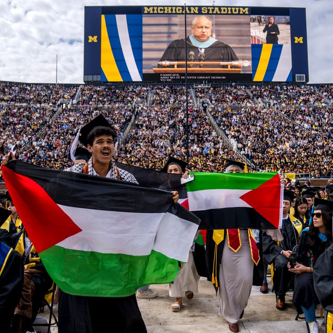
Commencement in 2026 appears to reflect a modest resurgence from the low-water mark of 2025 in “Free Palestine” outspokenness, based on an unscientific comparison. Last month, Democracy Now (DN) featured this 18-minute piece with recorded speeches and interviews with faculty, students, and cancelled speakers who sought to highlight Palestine: Democracy Now: Convocation Speakers on Palestine

  • At U Michigan’s convocation, Faculty Senate Chair Derek Peterson described his university positively as a haven against anti-Semitism and for Black action and Palestinian rights; he was rebuked by the university president for “hurtful” comments and declined an appearance on DN because of death threats.
  • Rutgers cancelled the convocation speech of Biotech CEO Rami Elghandour who’s spoken elsewhere on ICE, Palestine, Black lives, abortion, and gender equities. Coincidentally, he noted, he’s only been cancelled for speaking about Palestinian rights, though this is the topic on which he gets the most public support.
  • Noura Erekat, a Rutgers professor, organized an alternate People’s Convocation for Palestine, inviting Elghandour, and told DN that Palestine is on the front line of American democracy, noting for instance that Rutgers refused to divest from Tel Aviv University over complicity in oppressing Palestinians, despite a 2024 vote by 80 percent of Rutgers students and 58 percent of its faculty union and adjuncts union.
  • Shevani Desai, a graduating member of CUNY Law said that CUNY has cancelled graduation speeches and livestream commencement for the 3 years because it fears pro-Palestine speeches. She decried U.S. and CUNY Law support for Israel’s genocide and lamented at least one student leader and 4 faculty members were expelled, though 3 of the faculty overturned their firings through legal action.

Some other notable 2026 commencement events:

  • Town&Country reported on 8 university commencements affected by Palestine/Israel controversy, including two local universities. At Howard, Mayor Muriel Bowser was booed for her “partnership with AIPAC,” while at Georgetown Law, economist Morton Schapiro withdrew from his speaking engagement after students criticized his Zionist perspective on Gaza and his stance on Black lives. Town&Country: 2026 Commencements
  • Harvard Medical School graduate Leen Ezzedine spoke about the arbitrary circumstances in which medical students in America, Lebanon and Palestine study the same health issues and anatomies but Arab neighbors of Israel study with threatening drones overhead and classrooms destroyed around them.  Leen Ezzedine at Harvard
  • At Stanford, hundreds of graduates chanting “Free Palestine” walked out of Google CEO Sundar Pichai’s commencement speech to protest Google’s $1.2 billion Project Nimbus, which provides the Israeli military with cloud computing, surveillance, and AI that Human Rights Watch says Israel’s military uses to conduct attacks. Stanford walkout

Last week/this week. We were at Carderock last week (photo) and this Saturday we’re back at Candy Cane Park, with 11 miles for marathoners and 4 for the half-marathoners.

I learned that everybody’s free, that’s what the teacher said to me (Pete Seeger; lyrics: Tom Paxton, 1963)