Two Public Service Announcements for learning and helping, and then Mahmoud Darwish’s “The Prison Cell,” another poem that highlights—in spades–imagination and learning.
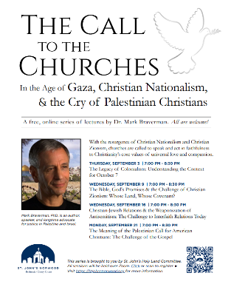
- Free Zoom series featuring Mark Braverman (hosted by my church): Sept 3: colonialism…the context for Oct 7; Sept 9: the challenge of Christian Zionism; Sept 16: Christian-Jewish relations and the weaponization of antisemitism; Sept 21: the Palestinian call to American Christians.
- Register to receive Zoom link: here. It’s Free…All are welcome!
- Much appreciation for our volunteers for Sept 4-5 (Abebe Bikila International Peace race): Bilal, Bill, Cathy, Greg, Khaled, Norman, Ramsey, Shobila, Sima, Tom, and me. I sent directions on Saturday and look forward to seeing you this Saturday. Lmk if you have questions.
The Prison Cell. Many use this poem by Mahmoud Darwish as an entry point for teaching about the power of the imagination and about such specifics as the status of Palestinians under occupation, as well as abstractions, such as the many ways in which people may be imprisoned figuratively.
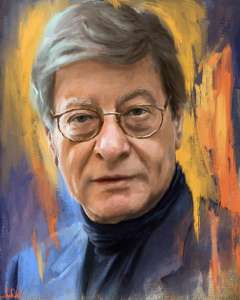
Ahmed Kadi’s painting of Darwish on Zinn Education Project.
- Linda Christenson, in the Zinn Education Project: “As Darwish portrays… as long as our minds are free, human-made prisons cannot contain our imaginations. After reading the poem with students, ask: “What imprisons you? Think metaphorically. For example, growing up, poverty imprisoned me…Other people’s ideas about women’s role in society imprisoned me.
- Linda Abell, Blog: Another Day on the Planet, says of “The Prison Cell” in her Day 261 [of the Genocide]: “…just as the United States incarcerates more people than any country on earth (currently about 2 million people), Israel incarcerates thousands upon thousands of Palestinians and holds them without filing charges. It’s all connected. We’re all connected.
The Prison Cell
It is possible . . .
It is possible at least sometimes . . .
It is possible especially now
To ride a horse
Inside a prison cell
And run away . . .
It is possible for prison walls
To disappear,
For the cell to become a distant land
Without frontiers:
What did you do with the walls?
I gave them back to the rocks.
And what did you do with the ceiling?
I turned it into a saddle.
And your chain?
I turned it into a pencil.
The prison guard got angry.
He put an end to the dialogue.
He said he didn’t care for poetry,
And bolted the door of my cell.
He came back to see me
In the morning.
He shouted at me:
Where did all this water come from?
I brought it from the Nile.
And the trees?
From the orchards of Damascus.
And the music?
From my heartbeat.
The prison guard got mad.
He put an end to my dialogue.
He said he didn’t like my poetry,
And bolted the door of my cell.
But he returned in the evening:
Where did this moon come from?
From the nights of Baghdad.
And the wine?
From the vineyards of Algiers.
And this freedom?
From the chain you tied me with last night.
The prison guard grew so sad . . .
He begged me to give him back
His freedom.
~Mahmoud Darwish (1941–2008)
Translated by Ben Bennani
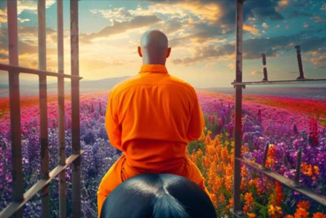
“Riding Away” by Dale Innis,
The Digital Rabbit Hole, featuring “The Prison Cell.”
Final PSAs.
- Thanks and Iqraa kudos to Cathy for bringing food for last Saturday’s run at Candy Cane City.
- Iqraa fundraising pages. To create your fundraising page on the UPA website (choose “be a fundraiser” and “as individual”): Create fundraising page
Last week/this week: last week we ran at Candy Cane City and this week all our runners who aren’t volunteering will meet at Fletcher’s Cove for 13.1 miles.
Where did this book come from?
Our friends in America sent it with love.
Kirk

